Honey Oat Bread

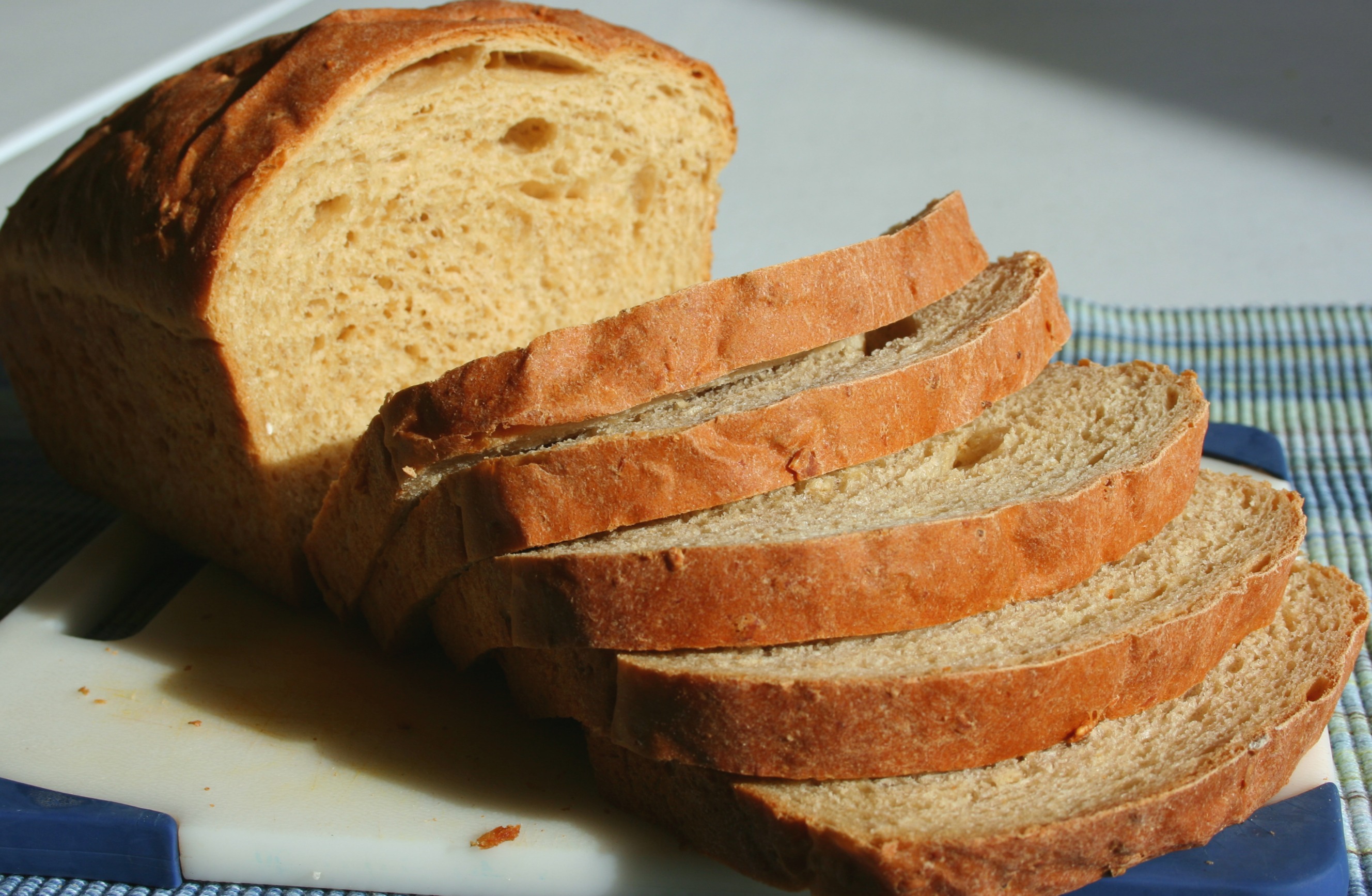
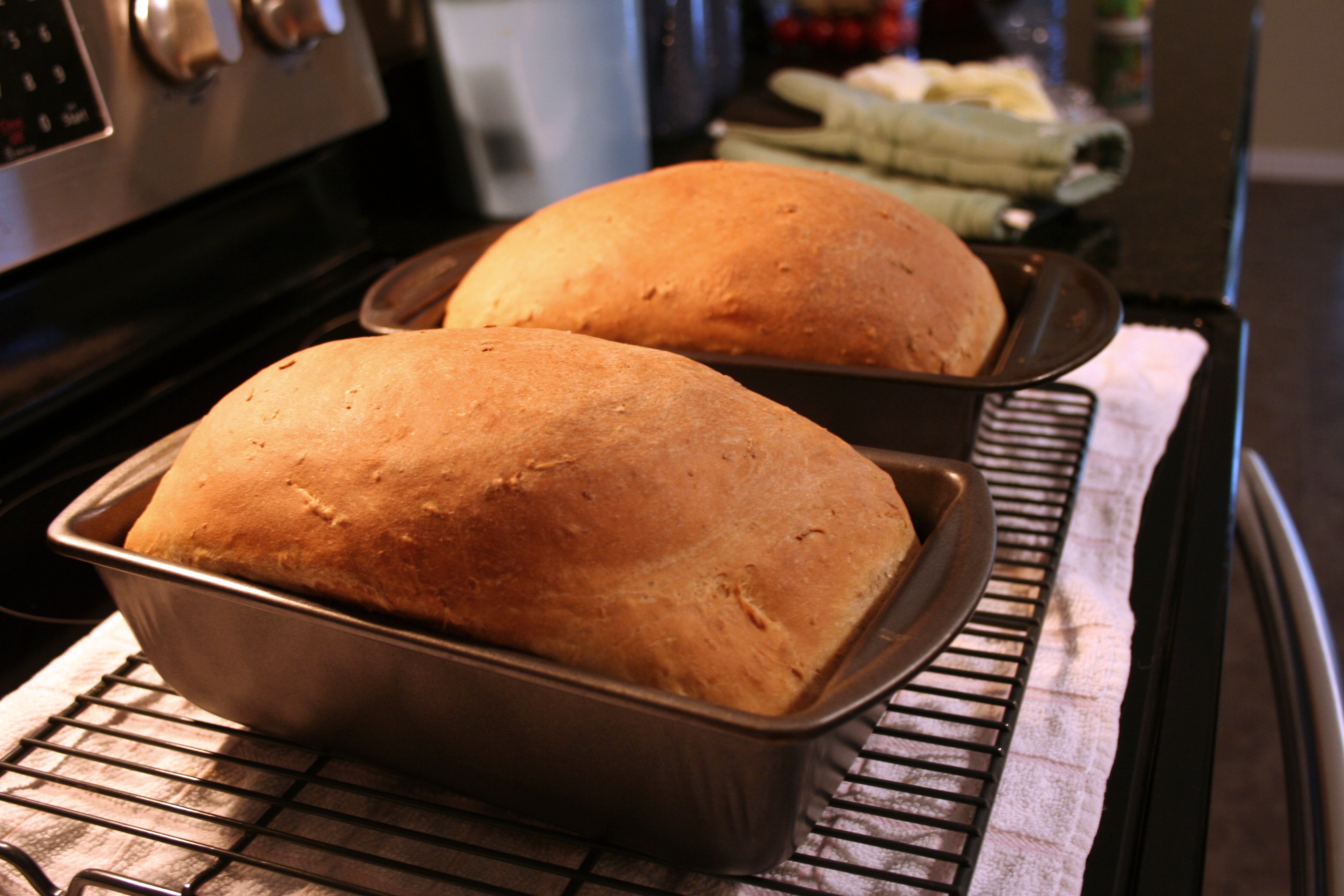
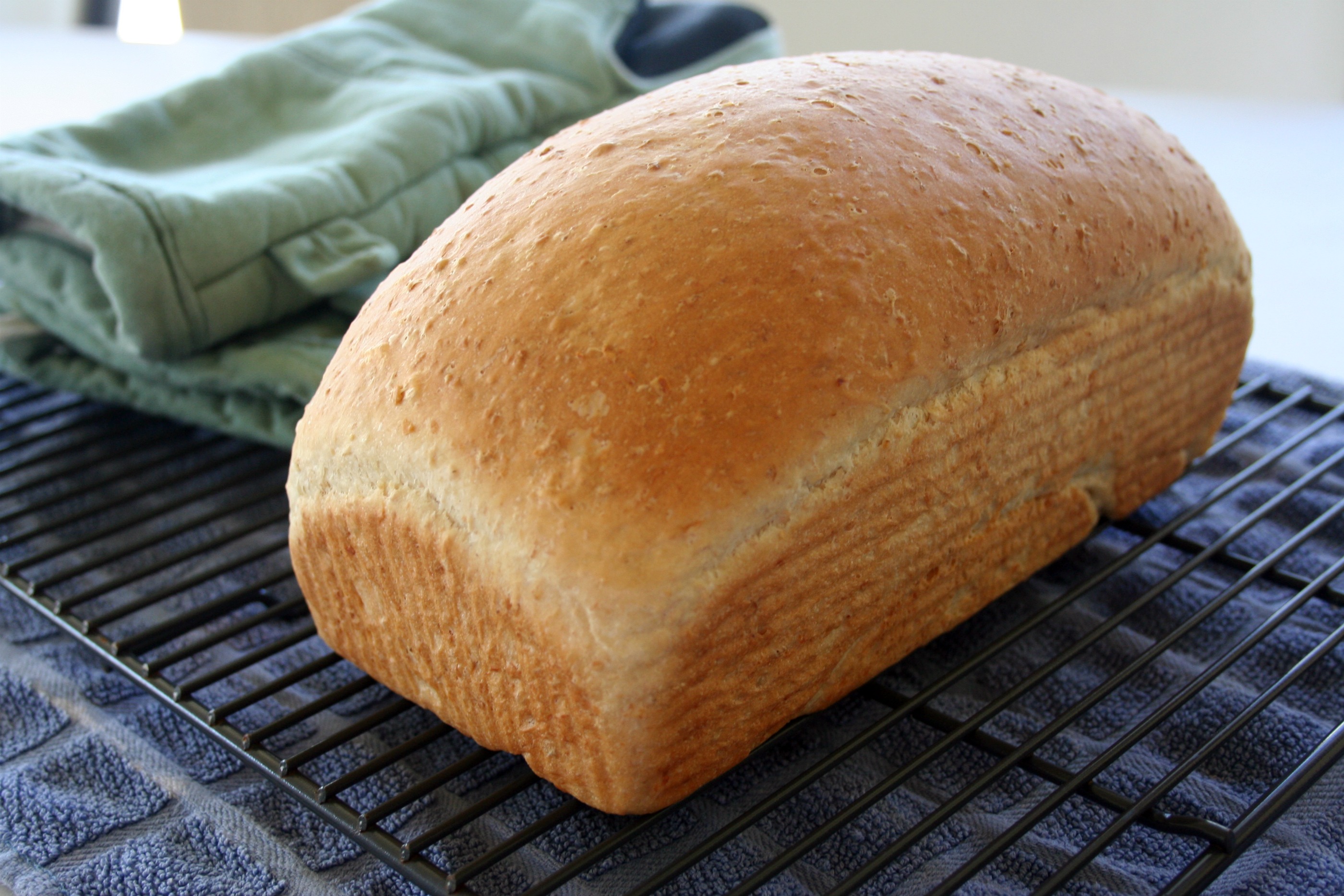
I love bread! This one is a little sweet, buttery, moist and delicious. It makes perfect toast because all that buttery, sweet, oaty-ness is turned up. The recipe is for a pullman pan, but offers the conversion for a large, 9×5 loaf pan. It just takes longer to bake, about 40 minutes. Be sure to check its temperature before de-panning. Thanks for reading, enjoy!

Honey Oat Bread – adapted from King Arthur Flour

  • 3 cups AP flour
  • 2 1/4 teaspoons yeast
  • 1 cup old-fashioned rolled oats (not quick oats)
  • 1 1/2 teaspoons salt
  • 4 tablespoons melted butter
  • 3 tablespoons honey
  • 1 cup to 1 cup + 2 tablespoons lukewarm water*
  • *Use the smaller amount in the summer, or in a humid climate; the larger in winter, or in a drier climate.

1) Combine all of the ingredients, and mix until cohesive. Cover the bowl, and let the dough rest for 20 minutes, to give the oats a chance to absorb some of the liquid. Then knead — by hand, stand mixer, or bread machine — to make a smooth, soft, elastic dough.

2) Place the dough in a lightly greased bowl, or in an 8-cup measure (so you can track its progress as it rises), and let it rise for 1 to 1 1/2 hours, until it’s risen noticeably. It won’t necessarily double in bulk.

3) Gently deflate the dough, and shape it to fit into a 9×5 loaf pan. Cover lightly with plastic wrap and let rise until the loaf crests over the pan by one inch. Preheat your oven to 350 during the last 15 to 20 minutes of the rise time.

4) Remove the plastic and place in the center of the oven, bake for 40 to 45 minutes or until a thermometer inserted in the center registers at least 190 degrees F.

7) Remove the bread from the oven, and turn it out of the pan onto a rack. Run a stick of butter over the top, if desired; this will yield a soft, buttery crust. Cool completely before cutting; wrap airtight and store for several days at room temperature.

Yield: 1 standard loaf.

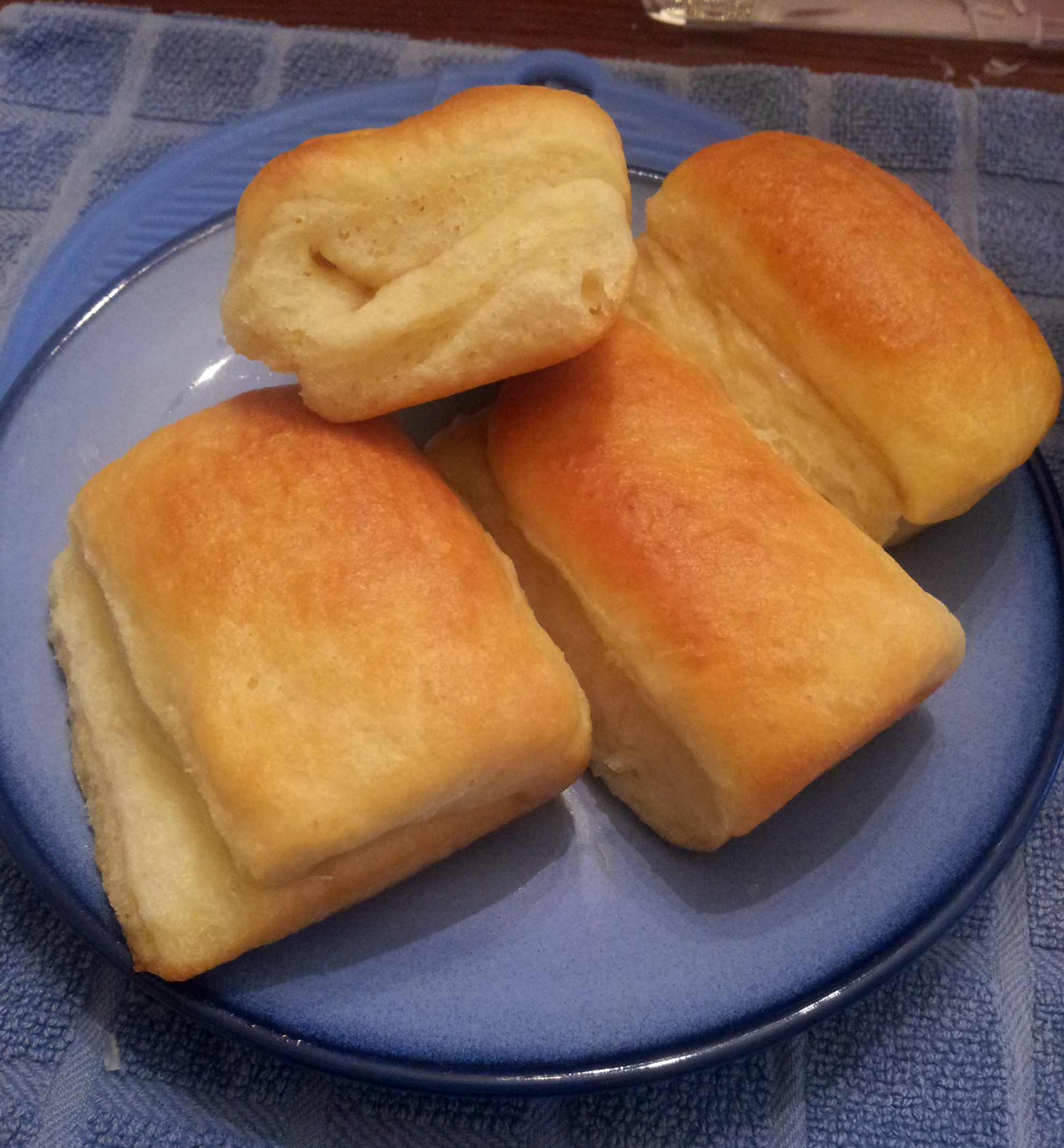
Parker House Rolls

Quick Post: These are soft, buttery and perfect accompaniment to any soup. Thanks for reading, enjoy!
Parker House Rolls – adapted from King Arthur Flour
  • 3 cups all purpose flour
  • 2 1/2 teaspoons yeast
  • 3 tablespoons sugar
  • 1 1/4 teaspoons salt
  • 1/4 cup potato flour or 3/4 cup instant mashed potato flakes
  • 3 tablespoons butter
  • 1 cup milk
  • 1 large egg
  • 3 1/2 to 4 tablespoons butter, melted; for brushing on rolls

1) In a large mixing bowl, or in the bowl of an electric mixer, combine all of the ingredients (except the 3 tablespoons melted butter at the end), mixing to form a shaggy dough. Note: to speed the rising process, whisk together the milk and egg, and heat gently just enough to remove the refrigerator chill; then add to the remaining ingredients.

2) Knead the dough, by hand (10 minutes) or by machine (7 to 8 minutes) until it’s smooth.

3) Place the dough in a lightly greased bowl or 8-cup measure (so you can track its rising progress). Allow it to rise for 90 minutes; it’ll become quite puffy, though it probably won’t double in bulk. Note that the dough takes quite awhile to get going; after 1 hour, it may seem like it’s barely expanded at all. But during the last half hour, it rises more quickly.

4) Transfer the dough to a lightly greased work surface. Divide it in half. Working with one half at a time, roll or pat the dough into an 8″ x 12″ rectangle.

5) Brush the dough all over with a light coating of the melted butter. You’ll have melted butter left over; save it to brush on top of the baked rolls.

6) Cut the dough in half lengthwise, to make two 4″ x 12″ rectangles. Working with one rectangle at a time, fold it lengthwise to about 1/2″ of the other edge, so the bottom edge sticks out about 1/2″ beyond the top edge. You’ll now have a rectangle that’s about 2 1/4″ x 12″. Repeat with the other piece of dough.

7) Cut each of the rectangles crosswise into four 3″ pieces, making a total of 8 rolls, each about 2 1/4″ x 3″. Place the rolls, smooth side up, in a lightly greased 9″ x 13″ pan. Repeat with the remaining piece of dough, making 16 rolls in all. You’ll arrange 4 rows of 4 in the pan, with the longer side of the rolls going down the longer side of the pan. Gently flatten the rolls to pretty much cover the bottom of the pan.

8) Cover the pan, and let the rolls rise for about 45 minutes to 1 hour, until they’re puffy but definitely not doubled. Towards the end of the rising time, preheat the oven to 350°F.

9) Bake the rolls for 20 to 25 minutes, until they’re golden brown and feel set.

10) Remove them from the oven, and brush with the remaining melted butter. Pull them apart to serve.

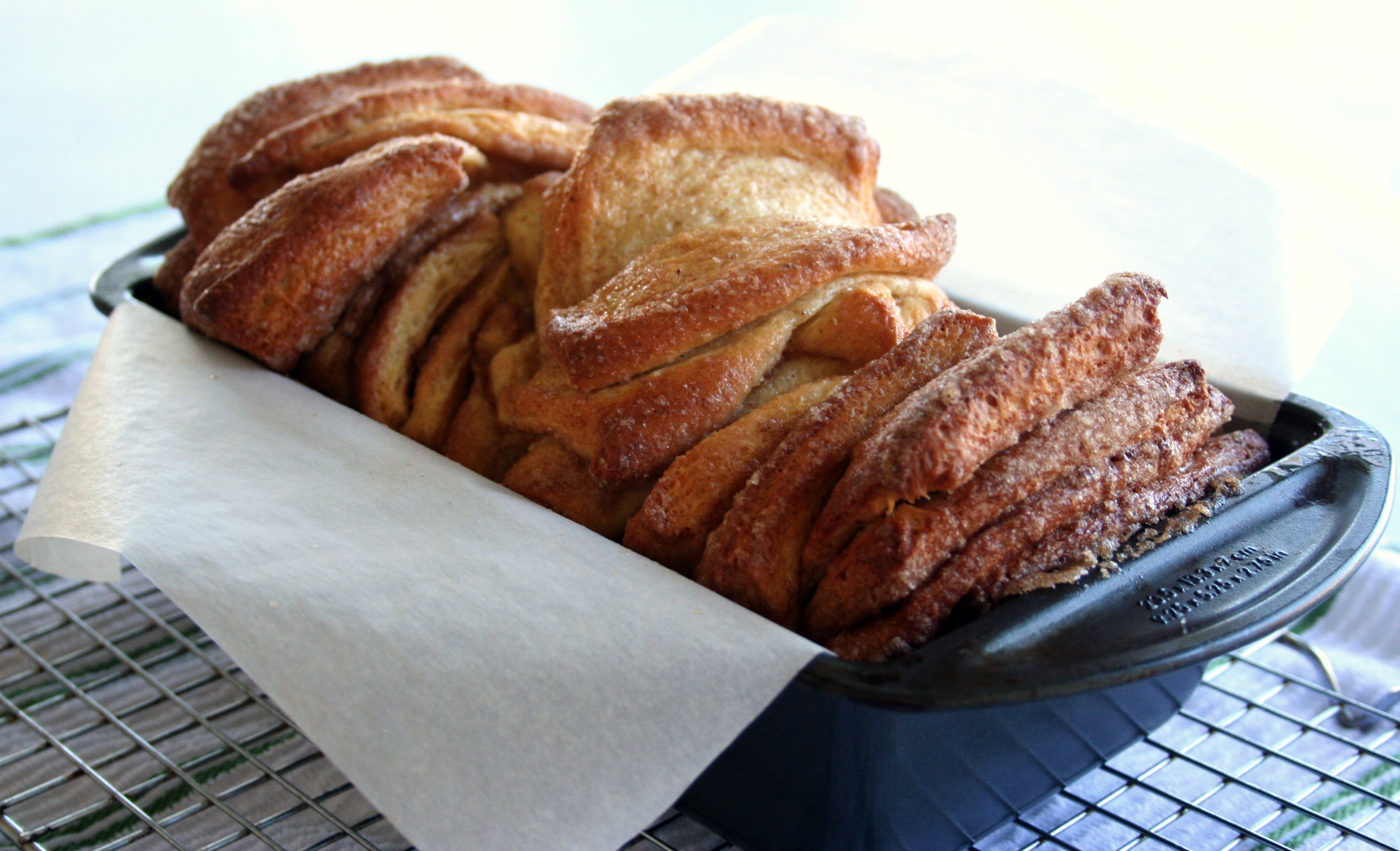
Finally: Cinnamon Pull-Apart Bread

“Finally” because I saw this recipe on Tastespotting back in March! 🙂 December is a great excuse to make all the decadent goodies that don’t really need a “special” occasion to be made. I have eaten way too many cookies this month – too many carbs, period! Top that off with no gym time this month…this is why it’s so popular to have that “lose weight” New Year resolution!  😉

While this was baking, it smelled wonderful as you may imagine! Who doesn’t love the warm yeast bread/cinnamon smell? It looks like it wants to climb out of the pan…(and into my belly) while it’s baking. It’s not as pretty as it was before the proofing, but looks don’t matter all that much because it tastes so amazing! Be sure to let it cool for at least 20 minutes (your patience will be rewarded, and your mouth will thank you). I used a piece of buttered parchment paper to make for easier removal of the loaf. This 9×5 pan is notoriously sticky and I’m looking forward to buying a couple of new USA Pans in this size to replace my old, junky ones. Thanks for reading, enjoy!

Cinnamon Pull-Apart Bread – adapted from Annie’s Eats via  Joy the Baker

1/4 cup granulated sugar

2 3/4 cups plus 2 tablespoons all-purpose flour

1 teaspoons (1 envelope) active dry yeast

1/2 teaspoon salt

2 ounces unsalted butter

1/3 cup whole milk

1/4 cup water

2 large eggs, at room temperature

1 teaspoon pure vanilla extract

For the Filling:

1 cup granulated sugar

2 teaspoons ground cinnamon

1/2 teaspoon fresh ground nutmeg

2 ounces unsalted butter, melted until browned

In a large mixing bowl (I used just the bowl of my stand mixer) whisk together 2 cups flour, sugar, yeast, and salt.  Set aside.

Whisk together eggs and set aside.

In a small saucepan, melt together milk and butter until butter has just melted.  Remove from the heat and add water and vanilla extract.  Let mixture stand for a minute or two, or until the mixture registers 115 to 125 degrees F.

Pour the milk mixture into the dry ingredients and mix with a spatula.  Add the eggs and stir the mixture until the eggs are incorporated into the batter.  The eggs will feel soupy and it’ll seem like the dough and the eggs are never going to come together.  Keep stirring.  Add the remaining 3/4 cup of flour and stir with the spatula for about 2 minutes.  The mixture will be sticky.  That’s just right.

Place the dough is a large,  greased bowl.  Cover with plastic wrap and a clean kitchen towel.  Place in a warm space and allow to rest until doubled in size, about 1 hour.  *The dough can be risen until doubled in size, then refrigerated overnight for use in the morning.  If you’re using this method, just let the dough rest on the counter for 30 minutes before following the roll-out directions below.

While the dough rises, whisk together the sugar, cinnamon and nutmeg for the filling.  Set aside.  Melt 2 ounces of butter until browned.  Set aside.  Grease and flour a 9x5x3-inch  loaf pan.  Set that aside too.

Deflate the risen dough and knead about 2 tablespoons of flour into the dough.  Cover with a clean kitchen towel and let rest for 5 minutes.  On a lightly floured work surface, use a rolling pin to roll the dough out.  The dough should be 12-inches tall and about 20-inches long.  If you can’t get the dough to 20-inches long… that’s okay.  Just roll it as large as the dough will go.  Use a pastry brush to spread melted butter across all of the dough.  Sprinkle with all of the sugar and cinnamon mixture.  It might seem like a lot of sugar.  Seriously?  Just go for it.

Slice the dough vertically, into six equal-sized strips.  Stack the strips on top of one another and slice the stack into six equal slices once again.  You’ll have six stacks of six squares.  Layer the dough squares in the loaf pan like a flip-book.  Place a kitchen towel over the loaf pan and allow in a warm place for 30 to 45 minutes or until almost doubled in size.

Place a rack in the center of the oven and preheat to 350 degrees F.  Place loaf in the oven and bake for 30 to 35 minutes, until the top is very golden brown.  The top may be lightly browned, but the center may still be raw.  A nice, dark, golden brown will ensure that the center is cooked as well.

Remove from the oven and allow to rest for 20 to 30 minutes.   Run a butter knife around the edges of the pan to loosen the bread and invert onto  a clean board.

Bread Bowls

My son could not believe I made bread bowl – he was pretty impressed by these! He thought I came up with the idea all by myself 😉 I can’t take the credit, but whoever thought of this is a genius. These were so easy to make, they’re basically a giant roll. I weighed out the dough and each bowl weighed 5.5 ounces before I baked them off. They had a thin, chewy crust with a dense interior – kind of like a sour dough bread, and they were perfect for the clam chowder I made. I bet a nice beef stew or chili would be so good in these, or even a broccoli cheese soup!  The recipe made five, perfectly sized bowls and they were really easy to hollow out. We didn’t waste all the good bread guts, but dipped them into the chowder! It was so good, I can’t wait to eat the leftovers 😉 Thanks for reading, enjoy!
Bread Bowls – adapted from King Arthur Flour
  • 3 cups King Arthur Unbleached All-Purpose Flour
  • 1 cup semolina
  • 2 1/4 teaspoons instant yeast
  • 1 tablespoon non-diastatic malt OR 2 teaspoons sugar
  • 1 1/2 teaspoons salt
  • 1 1/2 cups water

Combine all of the dough ingredients and mix and knead them together — by hand, mixer or bread machine — till you’ve made a soft, smooth dough. Allow the dough to rise, covered, for 1 to 1 1/2 hours.

Divide the dough into five pieces, and form them into round (not flattened) balls. Place them on a lightly greased or parchment-lined baking sheet, cover lightly, and set them aside to rise in a warm place for 1 1/2 hours, or until they’ve almost doubled in size.

Uncover the balls and let them sit for 10 to 15 minutes, to develop a tough skin. Just before placing the bread bowls in the oven, mist them heavily with water. Bake the bread bowls in a pre-heated 425°F oven for 18 to 22 minutes, until they’re a deep, golden brown. Turn off the oven, prop the door open a little, and leave the bread bowls inside for 15 minutes; this will keep the crust crisp.

Remove the bread bowls from the oven and cool them completely before cutting the tops off and removing the insides; (reserve the insides to make bread crumbs). Yield: 5 large bread bowls.

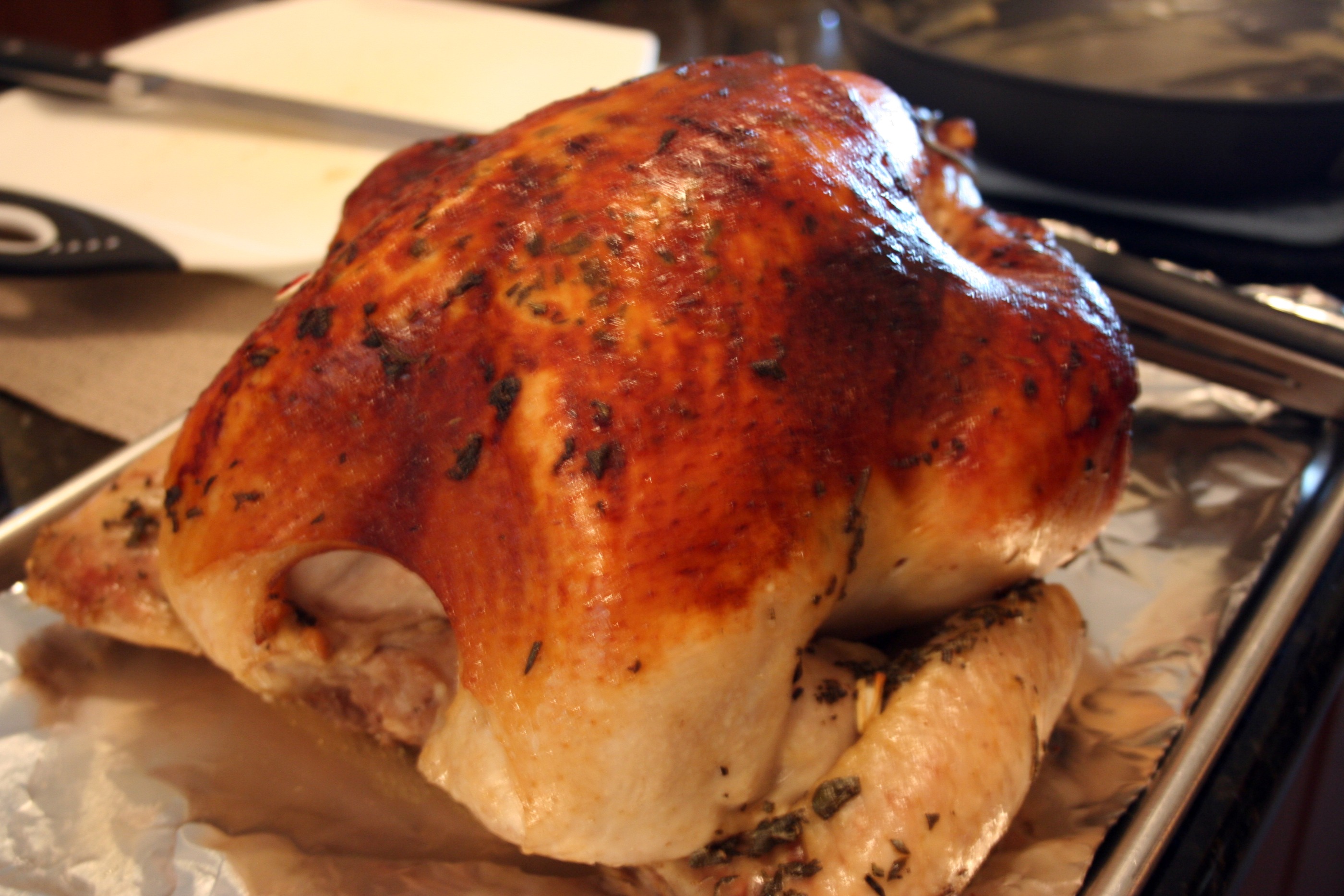
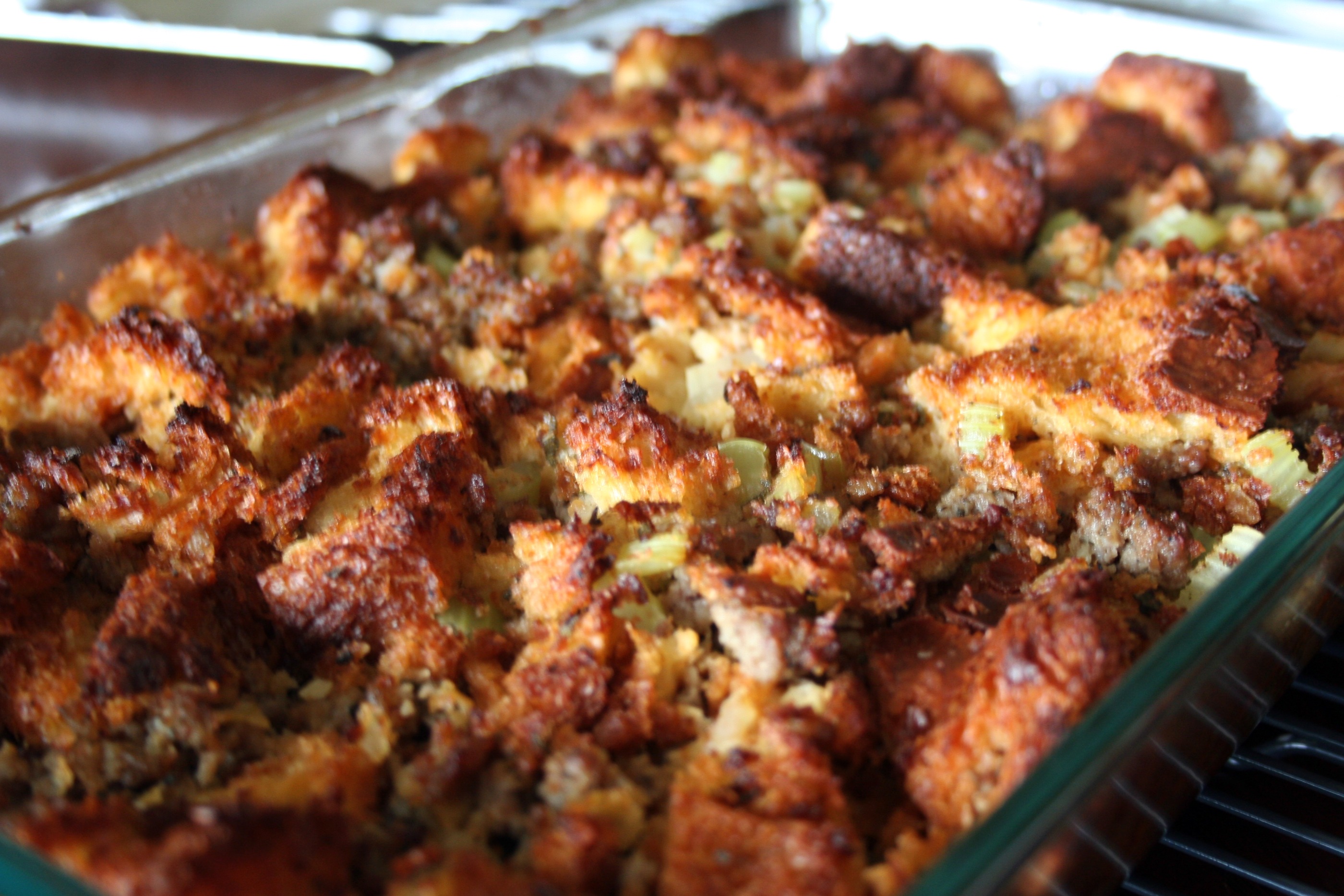
Re-Post: Brined Herb-Crusted Turkey with Apple Cider Gravy and Brioche and Sausage Dressing

My husband suggested I repost the recipes that I made for Thanksgiving last year. This post has had a major spike in popularity 🙂 This is the turkey we’re having this year – it’s so worth the effort and ingredient list! I’m also making the brioche and sausage dressing because it was amazing, and again well worth the effort and wait. I hope you all have a Thanksgiving full of family, friends and great food! Thanks for reading, enjoy 🙂

Brined Herb-Crusted Turkey with Apple Cider Gravy – adapted from Anne Burrell

Brine –

  • 7 quarts water
  • 1 quart apple cider
  • 3/4 cup kosher salt
  • 1/3 cup granulated sugar
  • 1 large onion, diced
  • 1 large or 2 small carrots, diced
  • 3 ribs celery, diced
  • 1 head garlic, cut in 1/2 equatorially
  • 1/2 bunch fresh rosemary
  • 1/2 bunch fresh sage
  • 6 bay leaves
  • 1 (12 to 14 pound) turkey

Herb Crust –

  • 1 bunch fresh rosemary, leaves finely chopped
  • 1 bunch fresh sage, leaves finely chopped
  • 3 sticks butter, room temperature
  • Kosher salt

Gravy –

  • 1 large onion, cut into 1/2-inch dice
  • 1 large or 2 small carrots, peeled and cut into 1/2-inch dice
  • 2 ribs celery, cut into 1/2-inch dice
  • 4 cloves garlic, smashed
  • 2 Granny Smith apples, cut into 1/2-inch dice
  • 5 bay leaves
  • 1 cinnamon stick
  • 1 bunch thyme
  • Kosher salt
  • 1 quart chicken stock, divided
  • 2 cups apple cider, divided
  • 1/2 to 3/4 cup all-purpose flour

Special equipment: butcher’s twine

To brine the turkey: Combine all of the ingredients for the brine in a large container. Add the turkey and let it brine in the refrigerator for 2 to 3 days.

To prepare the turkey for cooking: Remove the turkey from the brine the night before roasting and pat it thoroughly dry with paper towels. Combine the rosemary, sage, and butter for the herb crust in a small bowl. Season, to taste, with kosher salt. Work the butter under the skin of the turkey and massage it into the breasts and the legs. Massage the bitter on the outside of the skin as well. Tie the legs together over the breast so they will protect it during cooking and help keep it moist and juicy.

Gravy preparation: Put the onions, carrots, celery, garlic, apples, bay leaves, cinnamon stick and thyme in a roasting pan and season with salt. Arrange the turkey on top of the veggies and refrigerate overnight UNCOVERED! Yes, that’s right, uncovered. This will help the skin dry out and become really brown and crispy. Make sure that there is no raw food near the turkey in the refrigerator. After refrigerating overnight, the turkey is ready to go in the oven.

Preheat the oven to 450 degrees F.

Put 2 cups chicken stock and 1 cup apple cider in the bottom of the roasting pan. Roast the turkey in the preheated oven until the skin gets really nice and brown, about 40 minutes. Lower the oven heat to 350 degrees F for the remainder of the cooking time. Baste the turkey every 30 minutes or so and add more stock to the roasting pan, if needed. Cook about 17 minutes per pound. Once it gets to the proper color, tent the turkey with aluminum foil to prevent it from getting too dark.

Remove the turkey from the oven when an instant-read thermometer inserted in the thickest part of the turkey registers 160 degrees F. Make sure that the thermometer is not touching a bone when doing the reading. When the turkey has reached the proper temperature, remove it from the roasting pan to a cutting board and let it rest for at least 30 minutes. Cover loosely with aluminum foil.

Strain all the veggies over a bowl to separate them from the stock/mixture. Discard the veggies. Skim off the fat and add it to the roasting pan. This is the fat for the roux. Put the roasting pan over 2 burners and over a low heat and whisk in the flour. Cook until the mixture looks like wet sand, about 4 to 5 minutes. Slowly whisk in the remaining 1 cup apple cider, remaining chicken stock and the stock/cider mixture. Cook until the mixture has thickened and reached a gravy consistency. Taste and adjust the seasoning. Pour into a serving pitcher or bowl.

Carve the turkey, transfer to a serving platter and serve with the gravy.

Cook’s Note: Don’t fight over the drumsticks.

Give thanks for such a great turkey!!!
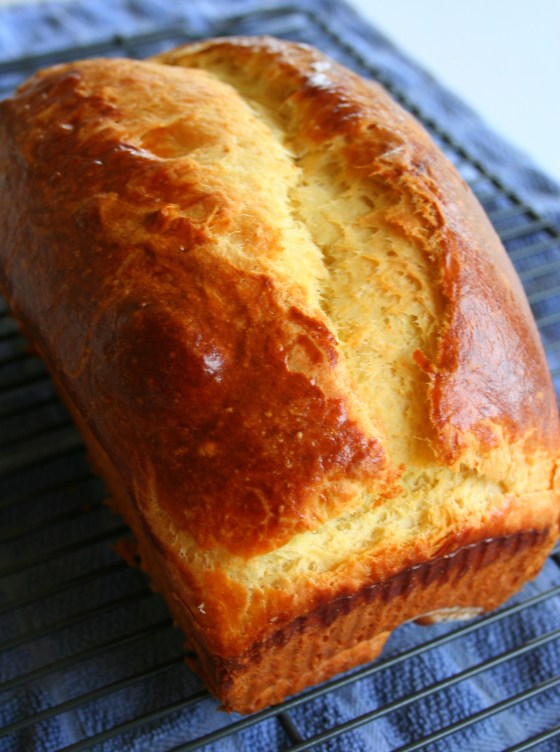
*Basic Brioche – The Bread Bible

Dough Starter –

  • 2 TBSP room temperature water
  • 1 TBSP sugar
  • 1/4 tsp. instant yeast
  • 1/2 cup (2.5 ounces) all-purpose flour
  • 1 large egg

*Make the starter one to two days ahead. In a mixing bowl, add ingredients and mix until very smooth. Cover with plastic wrap.

Flour Mixture –

  • 5.5 ounces all-purpose flour
  • 2 TBSP sugar
  • 1 1/4 tsp instant yeast
  • 1/2 tsp salt
  • 2 eggs
  • 8 TBSP room temperature butter

1. Combine first four ingredients and pour on top of the starter, cover with plastic wrap and let sit at room temperature for 1 1/2 to 2 hours.

2. Using a standing mixer, add eggs and mix on low speed for about a minute until evenly moistened. Raise speed to medium and beat for two minutes. Scrape the sides of the bowl with an oiled rubber scraper, then continue beating for five minutes longer or until the dough is smooth and shiny but very soft and sticky. It wont pull away from the bowl completely.

3. Add the butter one TBSP at a time until all incorporated. The dough will be soft and sticky. Lightly oil top and cover with plastic wrap. Let rise until doubled, about 1 1/2 to 2 hours.

4. Chill – refrigerate for one hour, then gently deflate with rubber spatula, then return it to the refrigerator for another hour.

5. Deflate/Chill – turn the dough out onto a well floured surface. Press or roll into a rectangle, flour as needed. Give the dough a business letter turn, brushing off excess flour. Rotate 90 degrees so the closed side faces left. Make a second business turn and round the corners. Dust it lightly on all sides with flour. Wrap loosely but securely with plastic wrap and place in a large ziploc bag. Refrigerate of at least six hours and up to two days.

6.  Shape/Rise – remove from fridge and gently press down to deflate. Roll/press into a 7 1/2″ by 5″ wide rectangle. Roll down from top in three turns, being sure to brush off the excess flour. Place seam side down in a prepared 8×4 inch loaf pan pressing down firmly. Cover lightly with plastic wrap and allow to rise until the dough reaches the top of the pan – about 1 1/2 to 2 hours.

7. Preheat oven to 350 degrees with a rack on the lowest position of the oven and place a baking stone or a baking sheet on the rack.

8. Glaze/Slash/Bake – glaze the top of the loaf with a mixture of one egg yolk and a splash of cream or milk. Slash the top of the loaf 1/4″ to 1/2″ deep lengthwise down the loaf, making sure to leave 1″ at each end. Set on hot stone and bake 35 to 40 minutes or until the internal temperature reaches 190 degrees.

9. Cool – un-mold loaf to cool on a wire rack at least two hours before cutting.

*Sausage Brioche Dressing – adapted from Food Network

  • brioche loaf, cubed into 1-inch pieces
  • 1 pound pork breakfast sausage
  • celery ribs, halved lengthwise and cross cut into 1/4-inch pieces
  • 4 cups stock
  • 1/4 cup chopped sage leaves
  • Kosher salt and fresh ground black pepper

Directions –

Preheat the oven to 400 degrees F.

Spread the brioche on a baking sheet and put it in the oven until lightly toasted, about 10 minutes. Set aside in a large bowl.

In a large skillet over medium-high heat, add the sausage and break it into pieces with a spoon. Cook until browned, then transfer it to the bowl with the brioche. Add the celery to the sausage drippingsand cook until softened, about 4 to 5 minutes. Put the sausage into the brioche bowl. Stir in the stock and sage and mix until the brioche absorbs most of the liquid. Season, to taste, with salt and pepper. Transfer the dressing to a 13 by 9-inch baking dish and cook, uncovered for 20 minutes. Cover with foil and bake until golden brown on top, another 20 to 25 minutes.

Dinner Rolls

Quick Post: I needed two dozen rolls for my daughter’s kindergarten class, and this recipe made the perfect amount. These are so easy to make and don’t require any special ingredients, and my only modification is that I used about 4 cups all purpose flour and 2 cups white whole wheat flour. They baked up light, soft and fluffy and they remind me of a Hawaiian roll – just less sweet. I’m hoping that the kids like them 🙂 Thanks for reading, enjoy!

Big Batch Quick Dinner Rolls – adapted from King Arthur Flour

  • 1/2 cup lukewarm water
  • 2 cups warm milk ( 100 – 110°F)
  • 3 tablespoons butter
  • 2 tablespoons sugar
  • 1 tablespoon salt
  • 2 1/2 tablespoons yeast, instant preferred
  • 6 to 7 cups King Arthur Unbleached All-Purpose Flour

Directions –

1) Combine the water, milk, butter, sugar, salt and yeast in a large bowl, or the bowl of your stand mixer. Stir well and let sit for 6 to 8 minutes, or until you see the yeast begin to foam.

2)Add 5 cups of flour and mix by hand or with the paddle attachment until the dough forms a rough, shaggy mass. The dough will not form a ball at this point, but will be just shy of coming together.

3) Add flour, 1/2 cup at a time and blend with the dough hook until a smooth ball begins to form. Knead by hand for about 10 minutes, or by machine for 4 to 5 minutes until a soft, smooth ball of dough is formed. The dough should feel elastic and slightly tacky to the touch.

4) Lightly spray your work bowl with cooking spray and place the dough in the bowl. Spritz the top of the dough with spray as well and cover lightly with plastic wrap or a shower cap. Let rise for 20 minutes at room temperature or until the dough is full and puffy.

5) Gently deflate the dough and pat out to a rough rectangle about 8 inches by 12 inches. Cut the dough into 4 long strips, then cut each strip into 6 portions for a total of 24 dough balls. Shape into round balls as you would shape meatballs, using your cupped hands to roll the dough. Spritz your hands with cooking spray to prevent sticking.

6) You can place the rolls into any of the following pans, well greased or lined with parchment paper: One half-sheet baking pan or 2 quarter-sheet pans. Two 13″ x 9″ x 2″ pans. Four 8″ or 9″ round baking pans OR a combination of any of these pans.

7) After the rolls are in the pans, cover again with your plastic wrap and let rise at room temperature for another 20 to 25 minutes, or until well rounded and full looking. If you are baking now, preheat the oven to 350°F.

8) Bake the rolls for 20 to 25 minutes or until golden brown and an internal thermometer reads 190°F. You can brush the baked rolls with melted butter if desired. Serve warm, store leftovers in a plastic bag for up to 3 days.

9) If you want to freeze the unbaked buns, place in the pans as described in step 6 and allow to rise for 10 minutes. Wrap airtight and freeze for up to 4 weeks. To bake, thaw overnight in the fridge, then unwrap and bake as directed.

Honey Oatmeal Bread

Another day, another bread recipe! I enjoy trying out new ones as often as possible, and this one seems to be pretty popular on Tasty Kitchen so I decided to give it a try. I made sure not to add the full amount of flour while kneading this in my stand mixer. I held back 2/3 of a cup and added just enough to make the dough not too sticky. I err on the side of caution when dealing with bread dough now after learning what adding too much flour can do to the finished bread. Mine was only slightly sticky and while I formed it I used a small amount flour on my work surface and hands. I haven’t used egg in a bread recipe for some time, but this loaf came out soft and tender even with all the wheat flour in this. In my experience with wheat breads, the flavor is usually bitter and the crumb isn’t nearly as nice. I’m really happy with how this turned out and hopefully I can get my husband to like it too 😉 He’s not a big fan of mostly wheat breads a, like this one; and oatmeal isn’t his favorite either. Thanks for reading, enjoy!
Honey Oatmeal Bread – adapted from Belle of the Kitchen
  • 4-½ teaspoons Active Dry Yeast (2 packages worth)
  • ½ cups Honey
  • 4 Tablespoons Butter
  • 2-¼ cups Water
  • 1 Tablespoon Salt
  • 8 tsp vital wheat gluten (optional)
  • 2-¾ cups All-purpose Flour (I used 2 1/4 cups)
  • 4 cups White Whole Wheat Flour
  • 1 cup Old Fashioned Oats
  • 1 whole Egg
Directions –
In a medium sized bowl, add HOT water, oats, butter, salt and honey. Stir to combine – let sit until butter is melted and it’s cool enough to add your yeast (110 -115 degrees or less).

In the bowl of a stand mixer fitted with a dough hook, combine 2 cups whole wheat flour and 1 cup all-purpose flour and oat mixture. With mixer on low, gradually blend liquid into dry ingredients until just blended. Increase the speed to medium, beat for two minutes, occasionally scraping bowl. Gradually beat in the egg and one cup of whole wheat flour to make a thick batter. Continue beating for two minutes. Stir in 1 cup whole wheat flour and 1 cup all purpose flour. Knead till smooth and elastic. Use more flour if dough is too sticky.

Place in a greased bowl and cover. Let rise in a warm place until doubled, about 1 hour.

Punch the dough down. Turn onto a floured surface; cover with the bowl and let rise for 15 minutes. Shape into two loaves and let rise for 1 hour in greased 9 x 5 loaf pans.

Bake at 350 degrees (F) for 35 to 40 minutes.


Cinnamon Raisin Bread

Yum! In my opinion, cinnamon and raisins got together so well. My husband doesn’t agree – he hates raisins. I cut this recipe in half just to make sure I don’t over do it with this yummy bread. It smells wonderful while baking and the scent lingered until this morning. My only issue with this bread is that it took so long to rise – at least 4 hours for the first one and almost 2 for the second rise. I was bummed that it didn’t rise quite where I had hoped before baking it off; but I was already staying up past my preferred bed time waiting for it to crest over the top of the pan. I even tried proofing it in my oven in hopes that it would speed up the process, and that took an hour. This recipe doesn’t have much yeast in it for some reason (only one packet worth for two loaves), so it probably didn’t help that I cut the recipe in half. Next time I’ll add a touch more yeast or just be extra careful with the temperatures of the liquids I add. I’m not sure what the culprit was, but the flavor is great and the bread isn’t as dense as I feared it might be. It’s not too sweet and it has a great cinnamon spiciness to it. This is the perfect kind of bread for Fall and I’m sure I will make this one or another recipe similar to it. Thanks for reading, enjoy!

Cinnamon Raisin Bread – adapted from King Arthur Flour

  • 1 1/2 cups milk
  • 1/4 cup (4 tablespoons) butter
  • 1 heaping cup dark and/or golden raisins
  • 1 cup rolled oats
  • 1/2 cup plus 1 tablespoon brown sugar, divided
  • 2 teaspoons salt
  • 2 tablespoons ground cinnamon
  • 1 tablespoon active dry yeast or 2 1/2 teaspoons instant yeast
  • 1/2 cup lukewarm water, 110°F
  • 5 1/2 to 6 cups King Arthur Unbleached All-Purpose Flour

Directions:

Combine and heat the milk and butter (on the stove or in the microwave) until just hot to the touch (about 120°F). Transfer to a large bowl and add the raisins or other fruit, oat flakes, 1/2 cup brown sugar, salt and cinnamon; stir well and set aside.

In a separate bowl, dissolve the remaining tablespoon of brown sugar and active dry yeast in the water and let sit until bubbles appear. (If you’re using instant yeast, skip this step; simply add all of the remaining ingredients to the milk mixture once it’s cooled to lukewarm.) When the milk mixture has cooled to lukewarm, add the yeast mixture and mix well. Stir in the unbleached flour, 1 cup at a time, until the dough begins to pull away from the sides of the bowl.

Turn the dough out onto a lightly floured surface and knead until smooth and elastic, about 8 minutes by hand, adding additional flour only as necessary to prevent sticking. You can also do this whole process in the bowl of an electric mixer, kneading the dough for 5 minutes. Place the dough in a lightly oiled bowl, turn to coat it on all sides, cover with plastic wrap and let rise in a cozy place until doubled in size, about 1 1/2 to 2 hours.

Knock down the dough, knead briefly on a lightly floured surface and divide in half. Shape into loaves and place into two lightly greased 8 1/2 x 4 1/2-inch loaf pans. Cover with plastic wrap and let rise until doubled in size, about 1 hour.

Preheat the oven to 375°F. Bake for 30 to 35 minutes until nicely browned. Near the end of the baking time, if the loaves are getting dark too quickly, cover them with a piece of aluminum foil, shiny-side up. Turn out onto a wire rack to cool.

Soft Garlic Knots

Soup needs bread! 😉 I didn’t have a couple of the ingredients that these knots required, but thankfully my improvisations didn’t ruin these. The dough improver is a necessary ingredient though with all the shaping these required. It prevents the dough from snapping back easily and rolling these out and tying them up would have been a pain with out it. These were fun to shape, but I didn’t roll them out like in the directions. I made sure that all my 16 pieces were at least 1.5 ounces each before shaping so I could make sure that they would all bake evenly. I took each ball and rolled it into about 11 inches (think of Play Doh snakes!) and made the knot, then tucked in the ends per the instructions. I baked off all 16 but only buttered half of them so I could store or freeze the rest. My family enjoyed these and they were a perfect accompaniment to our chicken noodle soup. Thanks for reading, enjoy!

Soft Garlic Knots – adapted from King Arthur Flour

Dough:

  • 3 1/4 cups (13 3/4 ounces) Mellow Pastry Blend or 3 cups (12 3/4 ounces) King Arthur Unbleached All-Purpose Flour
  • 1/4 cup (1 ounce) Baker’s Special Dry Milk
  • 3 tablespoons (1 1/4 ounces) potato flour (*I used a couple TBSP of potato flakes)
  • 1 tablespoon sugar
  • 2 teaspoons instant yeast
  • 3 tablespoons King Arthur Easy-Roll Dough Improver (optional)
  • 1 1/4 teaspoons salt
  • 4 teaspoons Pizza Dough Flavor (*I didn’t use this)
  • 2 tablespoons (7/8 ounce) olive oil
  • 1 cup (8 ounces) lukewarm water*

*Add an additional 2 tablespoons water in the winter, or if you live in a very dry climate.

Glaze:

  • 2 to 6 cloves peeled, crushed garlic
  • 4 tablespoons melted butter
  • 1/2 teaspoon Pizza Seasoning or Italian seasoning, optional (*I used parsley flakes)

Directions: 

Dough: Whisk the dry ingredients together to prevent the potato flour from clumping when liquid is added. Stir in the olive oil and water, then mix and knead — by hand, mixer, or bread machine — to form a smooth, elastic dough, adding additional water or flour as needed. Place the dough in a lightly greased bowl, cover it, and allow it to rise for about 1 hour, until it’s doubled in bulk.

Shaping: Divide the dough into 16 pieces, and roll each into a rope about 11 inches long; tie each rope into a knot, tucking the loose ends into the center. Place the knots on a lightly greased or parchment-lined baking sheet, cover, and let rise for 45 minutes to about an hour, until very puffy looking.

Glaze: Whisk together the melted butter and garlic. Set it aside.

Baking: Bake the knots in a preheated 350°F oven for 15 to 18 minutes. They should be set, but only very lightly browned. Remove the knots from the oven, and brush or drizzle them with the garlic butter. Sprinkle with freshly grated Parmesan cheese, and pizza seasoning or Italian seasoning, if desired. Eat the knots warm. Yield: 16 garlic knots.

Pizza Dough

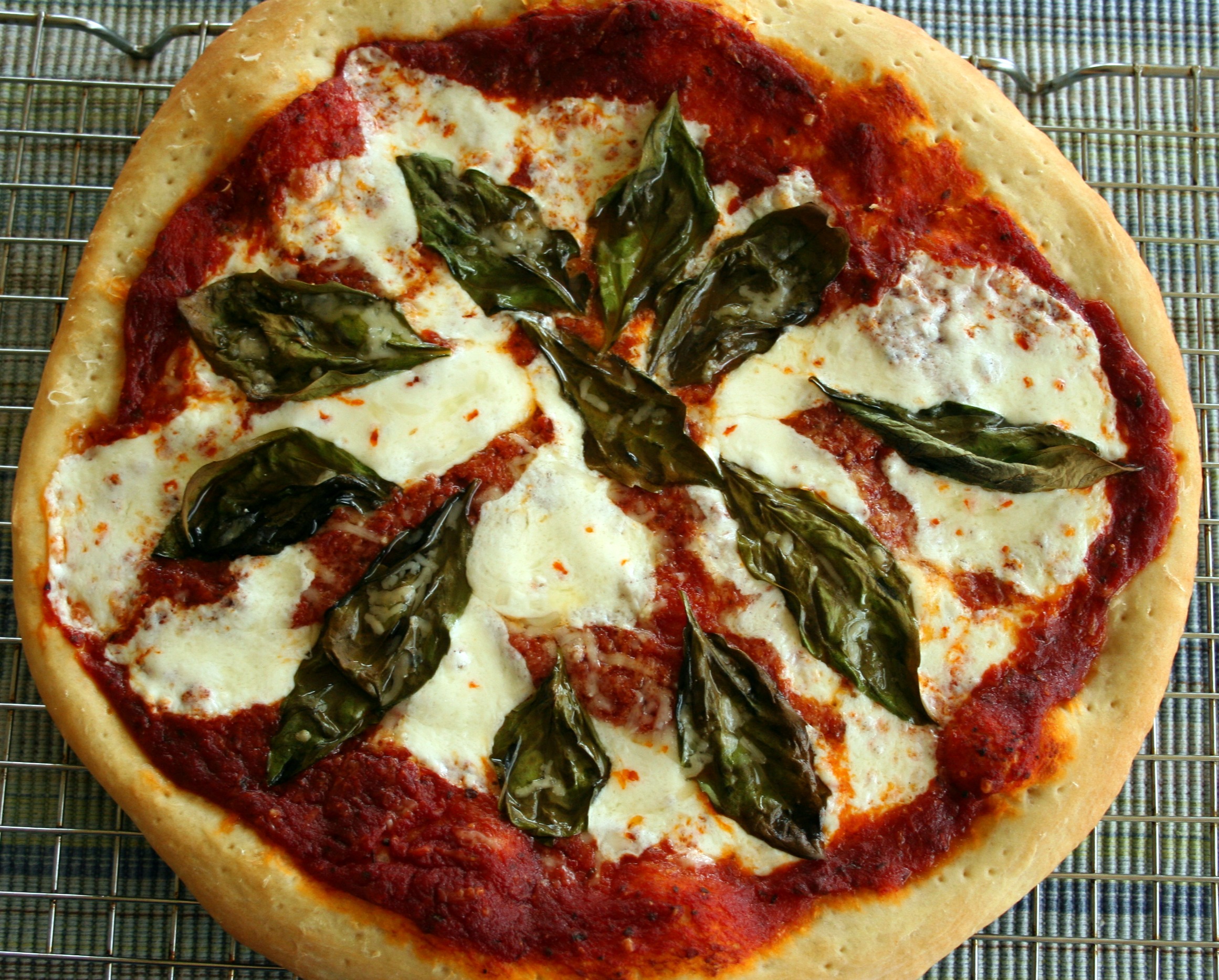
M requested a new pizza dough so this is what I decided to try. It wasn’t as good as this one, but I’m pretty partial to it. This had a nice texture and chew, it was really easy to work with; but there was nothing remarkable about the flavor. It’s just a good basic recipe, but my search for the perfect dough for him isn’t over. He really loves California Pizza Kitchen’s dough. I have to admit, it’s really good – so if I am able to find something that comes close it would be my new favorite. I doubled this recipe and ended up with four 11 ounce balls of dough, two are stashed in the freezer. I made one pizza Margarita and one barbecue chicken pizza (a la CPK, his fave – of course). The kids and I enjoyed the new (to them) pizza margarita and M happily ate four of his – pizza night is always a hit in this family 🙂 Thanks for reading, enjoy!

Pizza Dough – adapted from Food Network
  • 1 package active dry or fresh yeast
  • 1 teaspoon honey
  • 1 cup warm water, 105 to 115 degrees F
  • 3 cups all-purpose flour
  • 1 teaspoon kosher salt
  • 1 tablespoon extra-virgin olive oil, plus additional for brushing
Directions:

In a small bowl, dissolve the yeast and honey in 1/4 cup warm water.

In a food processor, combine the flour and the salt. Add the oil, the yeast mixture, and the remaining 3/4 cup of water and process until the mixture forms a ball. (The pizza dough can also be made in a mixer fitted with a dough hook. Mix on low speed until the mixture comes cleanly away from the sides of the bowl and starts to climb up the dough hook).

Turn the dough out onto a clean work surface and knead by hand 2 or 3 minutes longer. The dough should be smooth and firm. Cover the dough with a clean, damp towel and let it rise in a cool spot for about 2 hours. (When ready, the dough will stretch as it is lightly pulled).

Divide the dough into 4 balls, about 6 ounces each. Work each ball by pulling down the sides and tucking under the bottom of the ball. Repeat 4 or 5 times. Then on a smooth, unfloured surface, roll the ball under the palm of your hand until the top of the dough is smooth and firm, about 1 minute. Cover the dough with a damp towel and let rest 1 hour. At this point, the balls can be wrapped in plastic and refrigerated for up to 2 days.

Pizza Margarita –

  • 1 – 11 ounce ball of dough
  • 1/3 cup of pizza sauce
  • 4 ounces of fresh mozzarella
  • 10 leaves of basil
  • Parmesan cheese, Pecorino Romano cheese, olive oil for drizzling (optional)
Directions – 
*Preheat your oven to 475 about 15 minutes before you make your pizza. I use a pizza stone and place it on the lowest rack of my oven.

1. On a piece of parchment paper, shape the pizza dough into the desired diameter. I use a little olive oil to prevent sticking. Work from the inside out, and gradually move your hands away from the center of the dough. You could also do this with a rolling pin – I happen to love using my hands for the job. Once you’ve achieved the size you want, take a fork and poke the tines all over the surface of the dough.

2. Spread the pizza sauce all over, making sure to leave about an inch around the circumference. Next, take your torn mozzarella and place on top of the sauce. Because it’s fresh mozzarella, you can leave lots of empty space because this type of mozz melts beautifully and spreads itself nicely when heated. I love the stuff!  Top with basil leaves, a sprinkle of cheese and a drizzle of olive oil if desired.

3. Carefully transfer the pizza – still on its parchment paper to an upside-down sheet pan. I use it like a pizza peel to move it to the stone in the oven. Bake for about 10 minutes. Using the sheet pan again, remove the pizza from the oven and place the parchment paper and all onto a cooling rack.