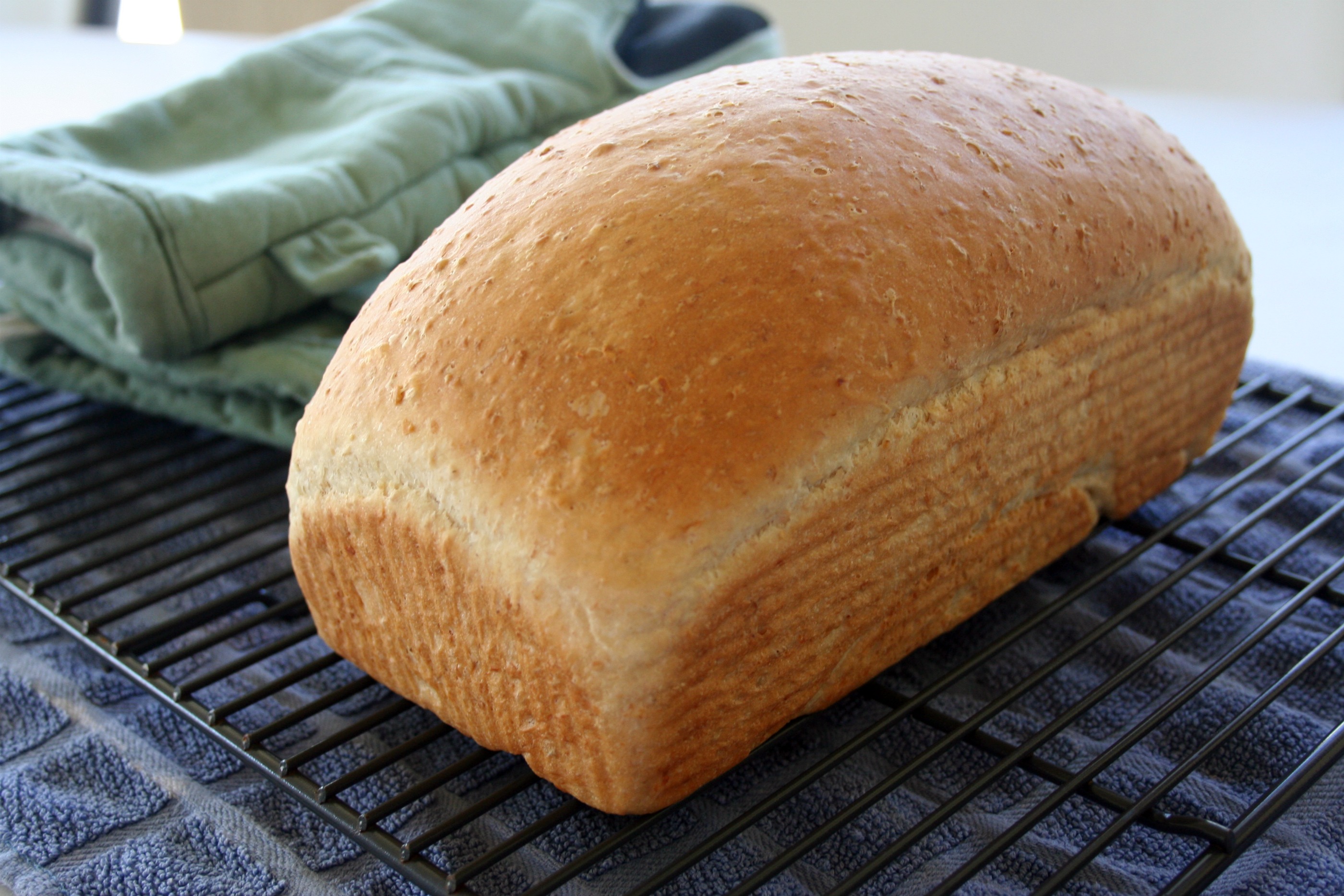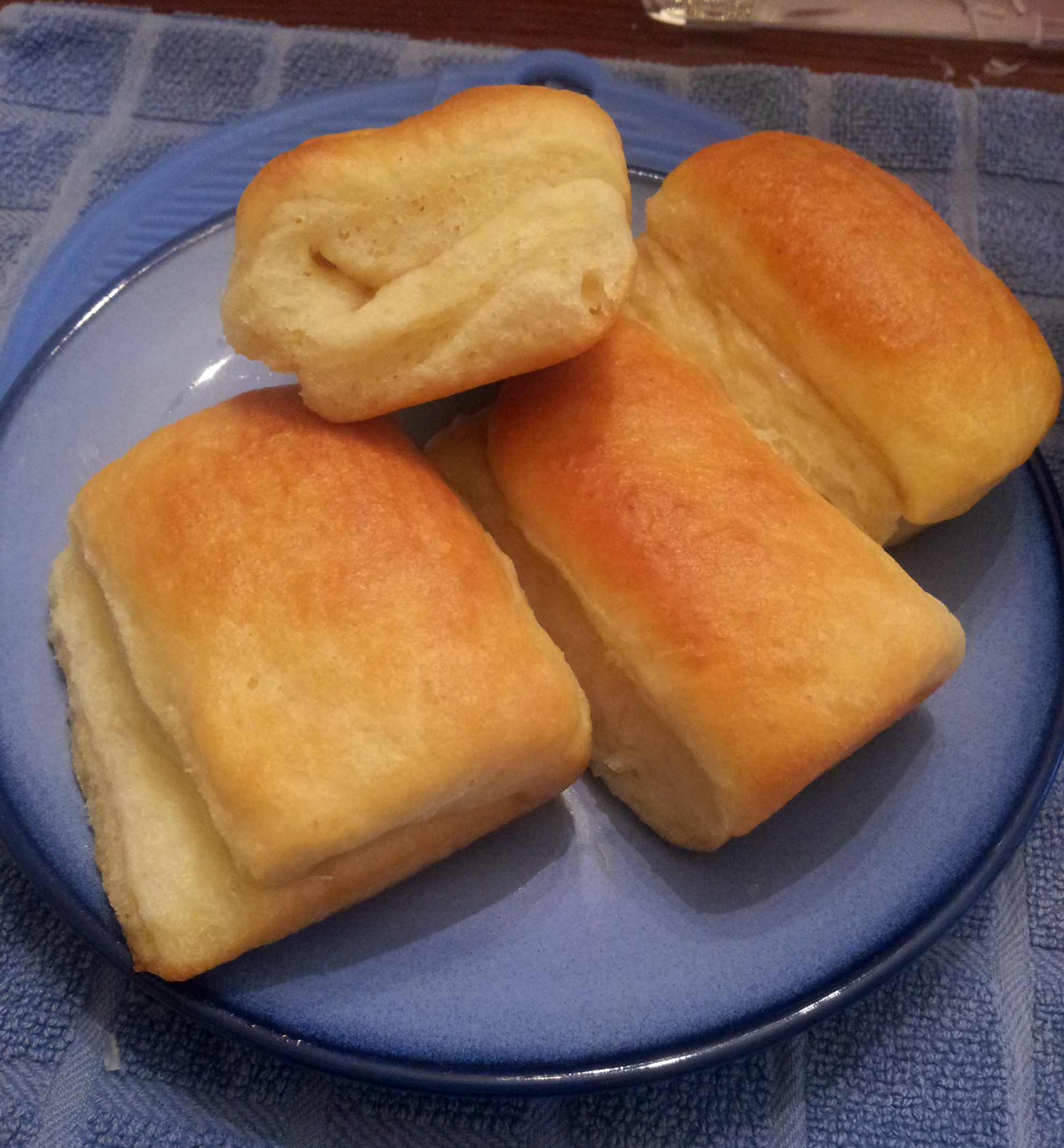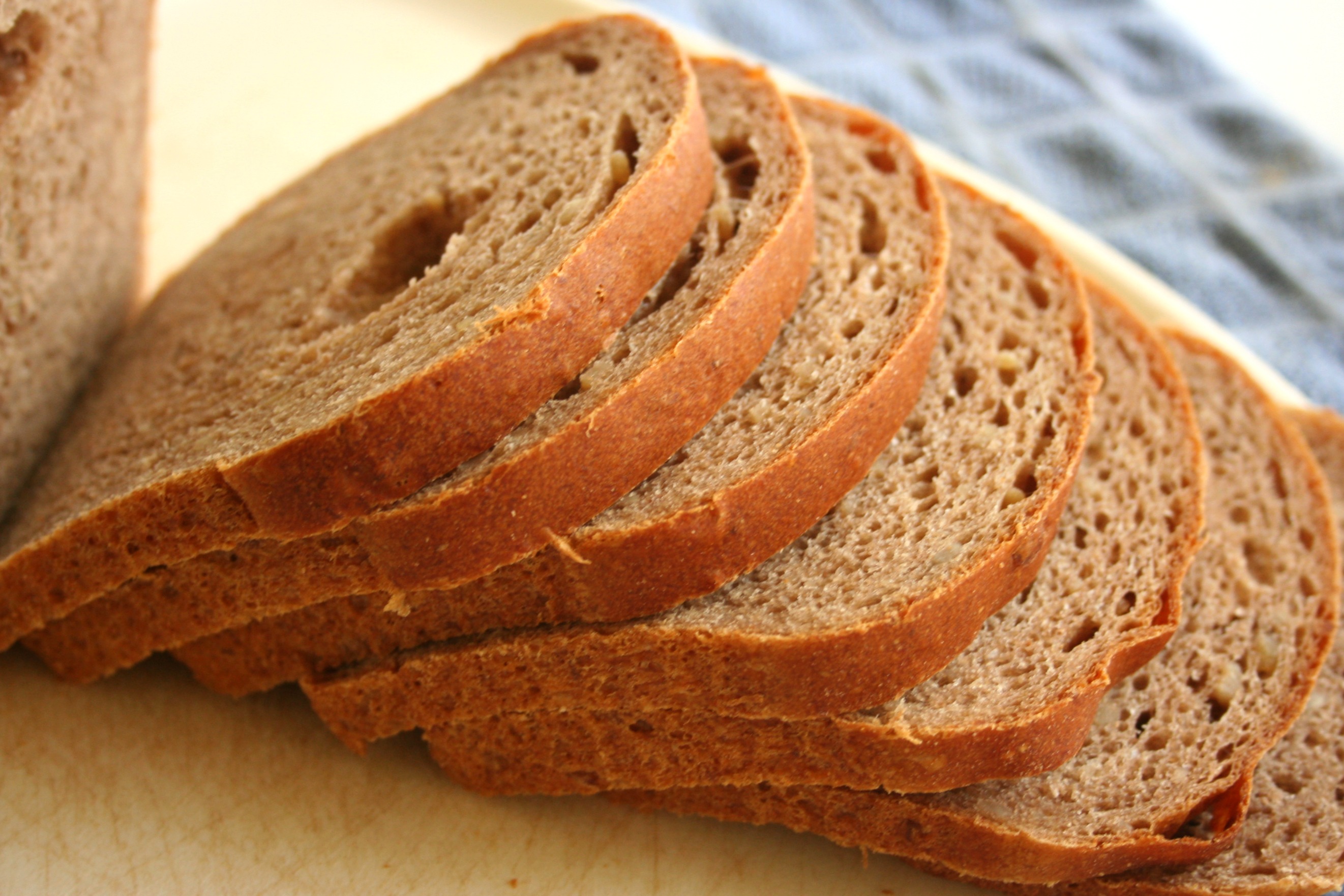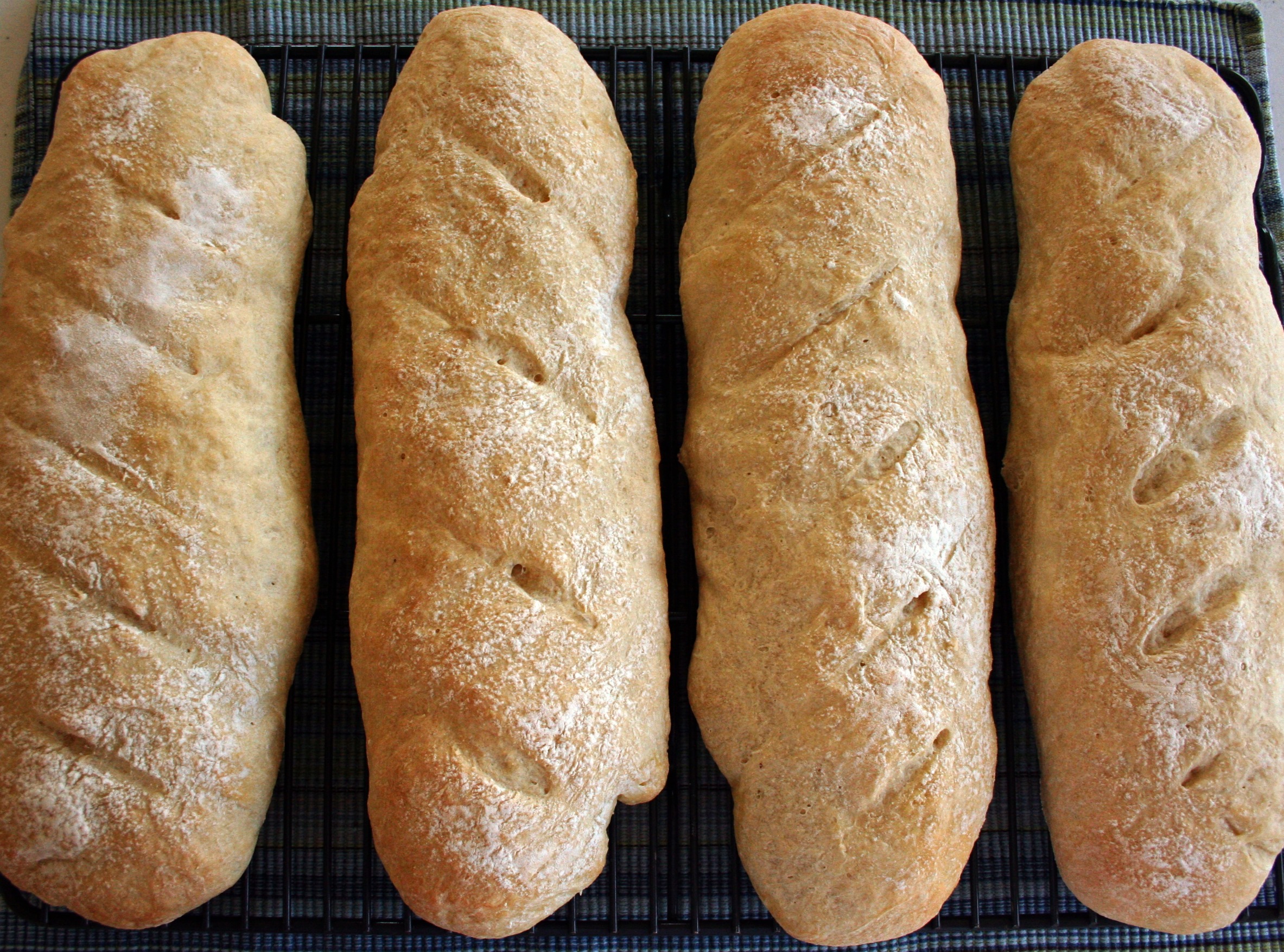
Challah Bread

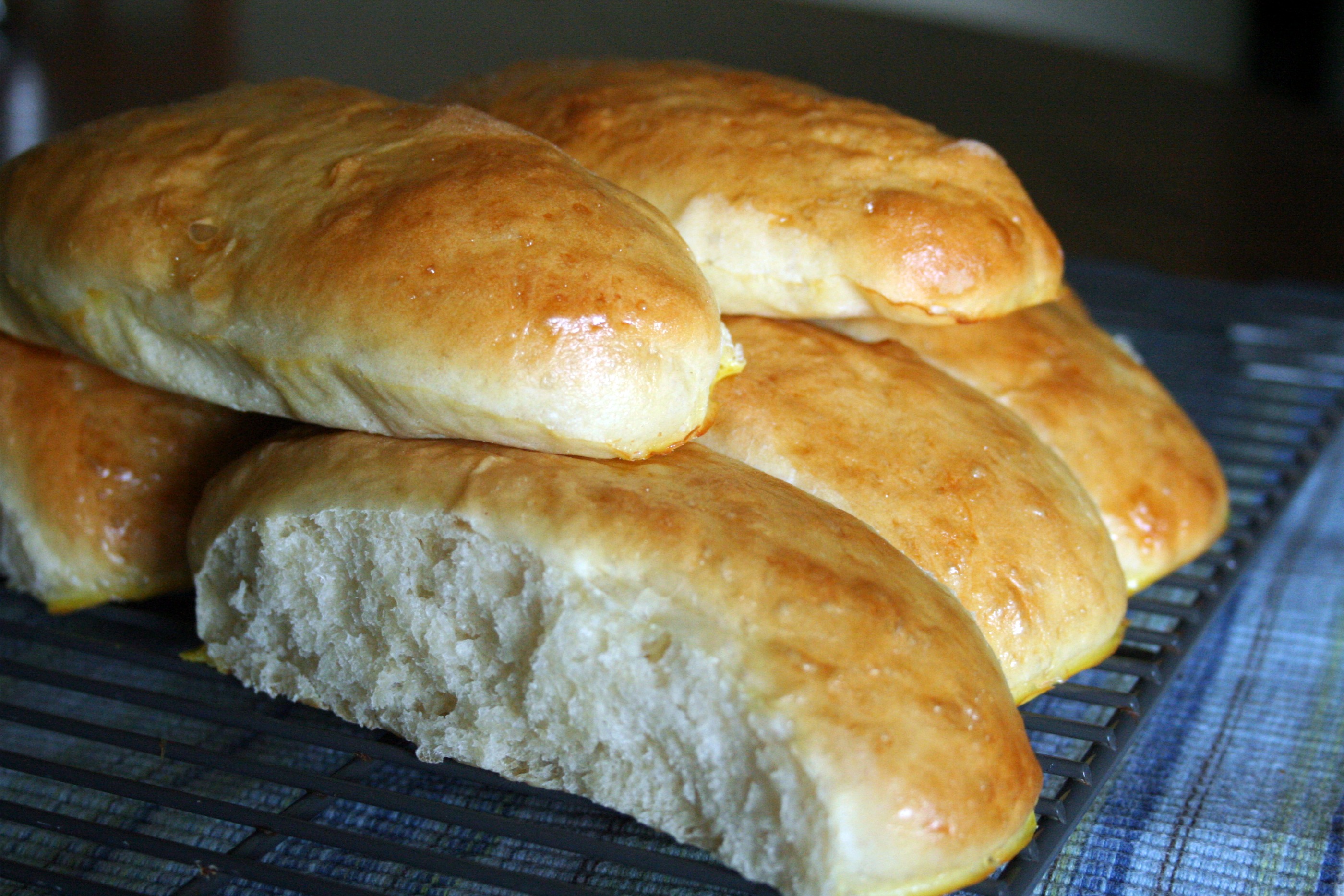
I have had this recipe bookmarked for far too long. It took my sisters FB post to remind me of the Challah bread that I never got around to making. This was something I never thought I’d get the guts to make years ago – it looked so difficult to me for some reason. I found a YouTube video that demonstrates how to properly braid the Challah and that was super helpful. While baking, the top braid started to tip over, but thankfully it never fell off. Next time I make it, I’ll make sure that the base is even and maybe even a little wider so this wont happen next time. The amount of dough this makes doesn’t seem like it would be enough to make such a large-looking braid and the bread bakes up surprisingly light and airy. This is a slightly healthier version of a traditional Challah bread recipe. I didn’t mean to choose a healthier version, and I wont tell M this bit of information 😉 I decided to use  grapeseed oil instead of the recommended olive oil, which replaced all the butter in the original version. I don’t think I have ever had Challah bread before, so I have nothing to compare it to, so maybe next time I will make the butter version. This loaf is destined to be french toast,  and I wont feel bad if I add a little butter to the pieces later;) Thanks for reading, enjoy!

Challah Bread – adapted from Confections of a Foodie Bride

  • 1/2 cup warm water
  • 3 cups AP flour
  • 1 pkg instant yeast
  • 2 eggs and one egg yolk
  • 2 TBSP raw sugar
  • 1 1/4 tsp fine sea salt
  • 4 TBSP grapeseed oil
  • 1 egg and 1 TSBP of water for the egg wash

Directions –

Place all ingredients in the bowl of your standing mixer. Mix with the paddle attachment until combined, then switch to the dough hook. Knead for 5 to 7 minutes or until the dough is smooth, elastic and slightly tacky. Transfer to a lightly oiled bowl, cover with plastic wrap and let proof until doubled in size – about an hour. Gently punch down the dough, cover and let it rise for another 45 minutes.

Cut off 1/3 of the dough (my digital scale takes all the guess work out, but if you’re more daring, you can eye-ball it). Divide the remaining dough into three equal pieces then roll out into 16 inch long strips. Braid.

Take the remaining ball of dough and divide it into three equal pieces and make a second braid. Set the smaller braid on top of the larger braid and cover loosely with plastic wrap. Let it proof for 30 minutes and preheat your oven to 375 degrees. Lightly brush the top of the loaf with the egg wash and bake it for 30 minutes or until dark brown. Cool completely on a wire rack – at least 2 hours. Enjoy!

Banana Bread, Revisited!

This one is hands down, M’s most requested bread. I have been making it for some time now, but there is just way too much sugar and butter for my liking. He hasn’t noticed that I have cut the sugar in half the last two times I have made it! Score for me 🙂 This time  I used less butter and sugar, more bananas and went with the addition of toasted walnuts. These were all really great modifications and I’m glad I wrote them down, because from now on, this is how he’ll get his banana bread! Thanks for reading, enjoy!

Banana Bread – heavily adapted from Crust and Crumb

  • 8 ounces flour (1 3/4 cup)
  • 1/2 TBSP baking powder
  • 1  tsp baking soda
  • 1/2 tsp salt
  • 6 TBSP butter, room temp
  • 8 ounces sugar (6 ounces brown, 2 ounces white)
  • 2 large eggs, room temp
  • 1 tsp vanilla extract
  • 1/2 cup buttermilk
  • 11-12 ounces very ripe banana (about three medium), mashed
  • 3/4 cup lightly toasted, coarsely chopped walnuts
Directions –

1. Sift flour, baking soda, baking powder and salt.

2. Using a standing mixer fitted with the paddle attachment or using a hand mixer, cream butter and brown sugar until light and fluffy – about 2 minutes.

3. Mix in eggs one at a time, incorporating each egg before adding the next. Mix in vanilla and continue beating for 2 to 3 minutes until light and fluffy.

4. Mix in 1/3 of the dry ingredients, then 1/3 of the buttermilk, then 1/3 of the mashed bananas. Continue in this manner until all the ingredients are incorporated and the batter is smooth. Stir in walnuts.

5. Preheat oven to 350 degrees and grease one 9×5 loaf pan. Bake for 45 minutes then reduce the oven temperature to 325 degrees. Bake for an additional 15 minutes or until baked through. The safest way of knowing if it is finished is to test them with a probe thermometer. The internal temperature should be 180 – 185 degrees.

6. Let the loaf cool in the pan for 10 minutes, then turn it out on a rack to cool for at least one hour before slicing.

Honey Oat Bread

I love bread! This one is a little sweet, buttery, moist and delicious. It makes perfect toast because all that buttery, sweet, oaty-ness is turned up. The recipe is for a pullman pan, but offers the conversion for a large, 9×5 loaf pan. It just takes longer to bake, about 40 minutes. Be sure to check its temperature before de-panning. Thanks for reading, enjoy!

Honey Oat Bread – adapted from King Arthur Flour

  • 3 cups AP flour
  • 2 1/4 teaspoons yeast
  • 1 cup old-fashioned rolled oats (not quick oats)
  • 1 1/2 teaspoons salt
  • 4 tablespoons melted butter
  • 3 tablespoons honey
  • 1 cup to 1 cup + 2 tablespoons lukewarm water*
  • *Use the smaller amount in the summer, or in a humid climate; the larger in winter, or in a drier climate.

1) Combine all of the ingredients, and mix until cohesive. Cover the bowl, and let the dough rest for 20 minutes, to give the oats a chance to absorb some of the liquid. Then knead — by hand, stand mixer, or bread machine — to make a smooth, soft, elastic dough.

2) Place the dough in a lightly greased bowl, or in an 8-cup measure (so you can track its progress as it rises), and let it rise for 1 to 1 1/2 hours, until it’s risen noticeably. It won’t necessarily double in bulk.

3) Gently deflate the dough, and shape it to fit into a 9×5 loaf pan. Cover lightly with plastic wrap and let rise until the loaf crests over the pan by one inch. Preheat your oven to 350 during the last 15 to 20 minutes of the rise time.

4) Remove the plastic and place in the center of the oven, bake for 40 to 45 minutes or until a thermometer inserted in the center registers at least 190 degrees F.

7) Remove the bread from the oven, and turn it out of the pan onto a rack. Run a stick of butter over the top, if desired; this will yield a soft, buttery crust. Cool completely before cutting; wrap airtight and store for several days at room temperature.

Yield: 1 standard loaf.

Parker House Rolls

Quick Post: These are soft, buttery and perfect accompaniment to any soup. Thanks for reading, enjoy!
Parker House Rolls – adapted from King Arthur Flour
  • 3 cups all purpose flour
  • 2 1/2 teaspoons yeast
  • 3 tablespoons sugar
  • 1 1/4 teaspoons salt
  • 1/4 cup potato flour or 3/4 cup instant mashed potato flakes
  • 3 tablespoons butter
  • 1 cup milk
  • 1 large egg
  • 3 1/2 to 4 tablespoons butter, melted; for brushing on rolls

1) In a large mixing bowl, or in the bowl of an electric mixer, combine all of the ingredients (except the 3 tablespoons melted butter at the end), mixing to form a shaggy dough. Note: to speed the rising process, whisk together the milk and egg, and heat gently just enough to remove the refrigerator chill; then add to the remaining ingredients.

2) Knead the dough, by hand (10 minutes) or by machine (7 to 8 minutes) until it’s smooth.

3) Place the dough in a lightly greased bowl or 8-cup measure (so you can track its rising progress). Allow it to rise for 90 minutes; it’ll become quite puffy, though it probably won’t double in bulk. Note that the dough takes quite awhile to get going; after 1 hour, it may seem like it’s barely expanded at all. But during the last half hour, it rises more quickly.

4) Transfer the dough to a lightly greased work surface. Divide it in half. Working with one half at a time, roll or pat the dough into an 8″ x 12″ rectangle.

5) Brush the dough all over with a light coating of the melted butter. You’ll have melted butter left over; save it to brush on top of the baked rolls.

6) Cut the dough in half lengthwise, to make two 4″ x 12″ rectangles. Working with one rectangle at a time, fold it lengthwise to about 1/2″ of the other edge, so the bottom edge sticks out about 1/2″ beyond the top edge. You’ll now have a rectangle that’s about 2 1/4″ x 12″. Repeat with the other piece of dough.

7) Cut each of the rectangles crosswise into four 3″ pieces, making a total of 8 rolls, each about 2 1/4″ x 3″. Place the rolls, smooth side up, in a lightly greased 9″ x 13″ pan. Repeat with the remaining piece of dough, making 16 rolls in all. You’ll arrange 4 rows of 4 in the pan, with the longer side of the rolls going down the longer side of the pan. Gently flatten the rolls to pretty much cover the bottom of the pan.

8) Cover the pan, and let the rolls rise for about 45 minutes to 1 hour, until they’re puffy but definitely not doubled. Towards the end of the rising time, preheat the oven to 350°F.

9) Bake the rolls for 20 to 25 minutes, until they’re golden brown and feel set.

10) Remove them from the oven, and brush with the remaining melted butter. Pull them apart to serve.

Bread Bowls

My son could not believe I made bread bowl – he was pretty impressed by these! He thought I came up with the idea all by myself 😉 I can’t take the credit, but whoever thought of this is a genius. These were so easy to make, they’re basically a giant roll. I weighed out the dough and each bowl weighed 5.5 ounces before I baked them off. They had a thin, chewy crust with a dense interior – kind of like a sour dough bread, and they were perfect for the clam chowder I made. I bet a nice beef stew or chili would be so good in these, or even a broccoli cheese soup!  The recipe made five, perfectly sized bowls and they were really easy to hollow out. We didn’t waste all the good bread guts, but dipped them into the chowder! It was so good, I can’t wait to eat the leftovers 😉 Thanks for reading, enjoy!
Bread Bowls – adapted from King Arthur Flour
  • 3 cups King Arthur Unbleached All-Purpose Flour
  • 1 cup semolina
  • 2 1/4 teaspoons instant yeast
  • 1 tablespoon non-diastatic malt OR 2 teaspoons sugar
  • 1 1/2 teaspoons salt
  • 1 1/2 cups water

Combine all of the dough ingredients and mix and knead them together — by hand, mixer or bread machine — till you’ve made a soft, smooth dough. Allow the dough to rise, covered, for 1 to 1 1/2 hours.

Divide the dough into five pieces, and form them into round (not flattened) balls. Place them on a lightly greased or parchment-lined baking sheet, cover lightly, and set them aside to rise in a warm place for 1 1/2 hours, or until they’ve almost doubled in size.

Uncover the balls and let them sit for 10 to 15 minutes, to develop a tough skin. Just before placing the bread bowls in the oven, mist them heavily with water. Bake the bread bowls in a pre-heated 425°F oven for 18 to 22 minutes, until they’re a deep, golden brown. Turn off the oven, prop the door open a little, and leave the bread bowls inside for 15 minutes; this will keep the crust crisp.

Remove the bread bowls from the oven and cool them completely before cutting the tops off and removing the insides; (reserve the insides to make bread crumbs). Yield: 5 large bread bowls.

100% Whole Wheat Nut & Seed Bread

Quick Post: This is probably the healthiest bread I have ever made and it tastes  great. I am so glad too, because my last attempt at 100% whole wheat bread wasn’t that good. It baked up dense and the flavor was more bitter, and for those reasons, I decided not to blog about it. This one is so good and next time I will have to double the recipe. White whole wheat is what I always have on hand, and I find that the flavor is milder and less bitter than red wheat flour. You don’t need the KAF bread improver and vital wheat gluten worked as a good substitution. I chose to sweeten mine with honey and my oil of choice was coconut. I love using coconut oil whenever possible in anything that is baked at 350 degrees or less. Thanks for reading, enjoy!
100% Whole Wheat Nut & Seed Bread – adapted from King Arthur Flour
  • 1 1/3 cups (10 5/8 ounces) lukewarm water
  • 3 tablespoons (1 1/4 ounces) coconut oil
  • 5 tablespoons (3 3/4 ounces) honey, molasses or maple syrup
  • 4 cups (16 ounces) King Arthur Premium Whole Wheat Flour or 100% White Whole Wheat flour
  • 1 tablespoon King Arthur Whole-Grain Bread Improver, optional (*I used vital wheat gluten)
  • 1/4 cup (1 1/4 ounces) sunflower seeds, chopped*
  • 1/4 cup (1 ounce) walnuts, chopped*
  • 1 1/2 teaspoons salt
  • 2 1/2 teaspoons instant yeast

*A quick whirl in the food processor does the job nicely.

To prepare the dough: Combine all of the ingredients, and mix them till you have a shaggy dough. Let the dough rest, covered, for 20 minutes, then knead till fairly smooth. Allow the dough to rise, covered, for about 2 hours, or until it’s puffy and nearly doubled in bulk.

Gently deflate the dough, shape it into a log, and place it in a lightly greased 8 1/2″ x 4 1/2″ bread pan. Cover the pan with lightly greased plastic wrap (or a clear shower cap), and allow it to rise for about 2 hours, till it’s crowned about 1″ to 2″ over the rim of the pan.

Bake the bread in a preheated 350°F oven for 40 to 45 minutes, tenting it lightly with aluminum foil for the final 20 minutes of baking. Yield: 1 loaf.

Easy Cream Biscuits

These are by far the best biscuits I have ever made! I couldn’t get over how tender these were – so perfect! Especially considering the last batch I made were so bad I didn’t even post about them. They were that embarrassing – like hockey puck-embarrassing! This recipe couldn’t be easier and there are only two ingredients required (if you use self-rising flour, but if you don’t have that you can make your own). I decided to buy the recommended White Lily Self-Rising flour and I am so glad I did. Apparently, it’s no secret to southern home cooks that this is the flour to use for biscuit making. These rose high and were so fluffy, light and tender – seriously, I couldn’t get over that! 🙂 I am so glad that I finally found a fool-proof recipe for biscuits. Thanks for reading, enjoy!

Easy Cream Biscuits – adapted from Leite’s Culinaria via Southern Biscuits

  • 2 1/4 cups (9.9 ounces) White Lily Self-Rising Flour
  • 1 1/4 cups heavy cream (*reserve 1/4 cup)
  • melted butter for brushing the tops
Directions:
1. Preheat oven to 450 degrees. Set a rack one level above the middle of your oven. For softer biscuits, prepare a 8 or 9 inch cake pan or oven proof skillet. The biscuits will fit together snuggly, helping each other stay tender but rise while baking. For a crisp overall exterior, select a baking sheet or large baking pan where the biscuits can be spaced wide apart, allowing air to circulate and creating a crisp exterior.

2. Fork-sift or whisk 2 cups of the flour in a large bowl. Make a deep hollow in the center of the flour with the back of your hand. Pour 1 cup of cream into the hollow and stir with a rubber spatula or large metal spoon, using broad circular strokes to quickly pull the flour into the cream. Mix just until the dry ingredients are moistened and the sticky dough begins to pull away from the sides of the bowl. If there is some flour remaining on the bottom and sides of the bowl, stir in 1 to 4 tablespoons of the reserved cream, just enough to incorporate the remaining flour into the shaggy, wettish dough. If the dough seems too wet, use more flour when shaping.

3. Lightly sprinkle a cutting board or other clean surface with some of the reserved flour. Turn the dough out onto the board and sprinkle it lightly with flour. Flour your hands and then fold the dough over in half. Pat the dough into a round about 1/3- to 1/2-inch-thick, using a little additional flour if the dough is sticky. Fold the dough in half a second time. If the dough is still clumpy, pat and fold it a third time.4. Pat the dough into a 1/2-inch-thick round for a normal biscuit, 3/4 inch thick for a tall biscuit, and 1 inch thick for a giant biscuit. Brush off any visible flour from the top. Dip a 2 1/2-inch biscuit cutter into the reserved flour and cut out the biscuits, starting at the outside edge and cutting very close together, being careful not to twist the cutter. Re-flour the cutter after each biscuit. (The scraps may be combined to make additional biscuits, although these scraps make tougher biscuits.)

4. Using a metal spatula, move the cream biscuits to the pan or baking sheet. Bake the biscuits for 6 minutes, then rotate the pan so the front is now turned to the back. If the bottoms are browning too quickly, slide another baking pan underneath to add insulation. Continue baking another 4 to 8 minutes until the cream biscuits are lightly golden brown. When the biscuits are done, a total of 10 to 14 minutes, remove from the oven and lightly brush the top of the biscuits with softened or melted butter. Turn the biscuits out upside down on a plate to cool slightly. Serve hot, right side up.

Cinnamon Raisin Bread

Yum! In my opinion, cinnamon and raisins got together so well. My husband doesn’t agree – he hates raisins. I cut this recipe in half just to make sure I don’t over do it with this yummy bread. It smells wonderful while baking and the scent lingered until this morning. My only issue with this bread is that it took so long to rise – at least 4 hours for the first one and almost 2 for the second rise. I was bummed that it didn’t rise quite where I had hoped before baking it off; but I was already staying up past my preferred bed time waiting for it to crest over the top of the pan. I even tried proofing it in my oven in hopes that it would speed up the process, and that took an hour. This recipe doesn’t have much yeast in it for some reason (only one packet worth for two loaves), so it probably didn’t help that I cut the recipe in half. Next time I’ll add a touch more yeast or just be extra careful with the temperatures of the liquids I add. I’m not sure what the culprit was, but the flavor is great and the bread isn’t as dense as I feared it might be. It’s not too sweet and it has a great cinnamon spiciness to it. This is the perfect kind of bread for Fall and I’m sure I will make this one or another recipe similar to it. Thanks for reading, enjoy!

Cinnamon Raisin Bread – adapted from King Arthur Flour

  • 1 1/2 cups milk
  • 1/4 cup (4 tablespoons) butter
  • 1 heaping cup dark and/or golden raisins
  • 1 cup rolled oats
  • 1/2 cup plus 1 tablespoon brown sugar, divided
  • 2 teaspoons salt
  • 2 tablespoons ground cinnamon
  • 1 tablespoon active dry yeast or 2 1/2 teaspoons instant yeast
  • 1/2 cup lukewarm water, 110°F
  • 5 1/2 to 6 cups King Arthur Unbleached All-Purpose Flour

Directions:

Combine and heat the milk and butter (on the stove or in the microwave) until just hot to the touch (about 120°F). Transfer to a large bowl and add the raisins or other fruit, oat flakes, 1/2 cup brown sugar, salt and cinnamon; stir well and set aside.

In a separate bowl, dissolve the remaining tablespoon of brown sugar and active dry yeast in the water and let sit until bubbles appear. (If you’re using instant yeast, skip this step; simply add all of the remaining ingredients to the milk mixture once it’s cooled to lukewarm.) When the milk mixture has cooled to lukewarm, add the yeast mixture and mix well. Stir in the unbleached flour, 1 cup at a time, until the dough begins to pull away from the sides of the bowl.

Turn the dough out onto a lightly floured surface and knead until smooth and elastic, about 8 minutes by hand, adding additional flour only as necessary to prevent sticking. You can also do this whole process in the bowl of an electric mixer, kneading the dough for 5 minutes. Place the dough in a lightly oiled bowl, turn to coat it on all sides, cover with plastic wrap and let rise in a cozy place until doubled in size, about 1 1/2 to 2 hours.

Knock down the dough, knead briefly on a lightly floured surface and divide in half. Shape into loaves and place into two lightly greased 8 1/2 x 4 1/2-inch loaf pans. Cover with plastic wrap and let rise until doubled in size, about 1 hour.

Preheat the oven to 375°F. Bake for 30 to 35 minutes until nicely browned. Near the end of the baking time, if the loaves are getting dark too quickly, cover them with a piece of aluminum foil, shiny-side up. Turn out onto a wire rack to cool.

Sub Rolls

I have been on the lookout for a recipe like this for some time. This dough was not easy to work with at all because it was so sticky, and these rolls wont win any beauty contests, but hopefully it was worth the mess. While handling it try to have some olive oil or flour on your hands and work surface to make things a little less sticky. This dough did come together quickly and the rise time wasn’t too long either, so from start to finish it should take less than three hours, and most of that is just your rise and bake time.

Verdict: These came out light colored, but they did bake through all the way. It’s hard for me to resist leaving loaves in longer than the recommended amount of time when this happens. There is hardly any fat in this recipe – only 2 teaspoons of olive oil, so they probably aren’t meant to be any darker than this. The interior was nice and light with big bubbles and a thin, crisp crust and they held up well to our sandwich filling. Overall, I’m happy with how these turned out but I’m sure I’ll find an excuse to try a new recipe soon. Thanks for reading, enjoy!

Long Loaves – adapted from Cookistry

  •  2 cups lukewarm water
  • 1 tablespoon yeast
  • 1 tablespoon sugar
  • 1/2 cup semolina flour
  • 4 cups (18 ounces) bread flour
  • 2 teaspoons salt
  • 2 tablespoons olive oil
Directions –
1. In a bowl of a standing mixer, combine all dry ingredients and pour the wet over top. Mix until a rough dough is formed, then knead with the dough hook for 5 to 7 minutes. Dump the dough in a lightly oiled bowl and cover with oiled plastic wrap. Let it sit at room temp for 50-60 minutes or until it has doubled in size.
2. Lightly flour your work surface.  Turn out the dough and divide it into 4 roughly equal pieces. Roll each piece into a log about 12 inches long. Place 2 logs on each baking sheet. They’re look a little narrow, but they will grow impressively.
3. Cover the dough with plastic wrap and set aside to rise for 20 minutes. Remove the plastic wrap. If it seems to be sticking, flour the surface a bit – rice flour is nice for this but regular flour is fine. Slash the loaves as desired, and cover them with plastic wrap again. Let rise for another 10 minutes. They should be doubled in size – maybe a little more.
4. Bake at 350 degrees until golden brown, about 25 minutes, rotating the pans about halfway through the baking time. Let the loaves cool completely on a rack.

Homemade Hot Dog Buns

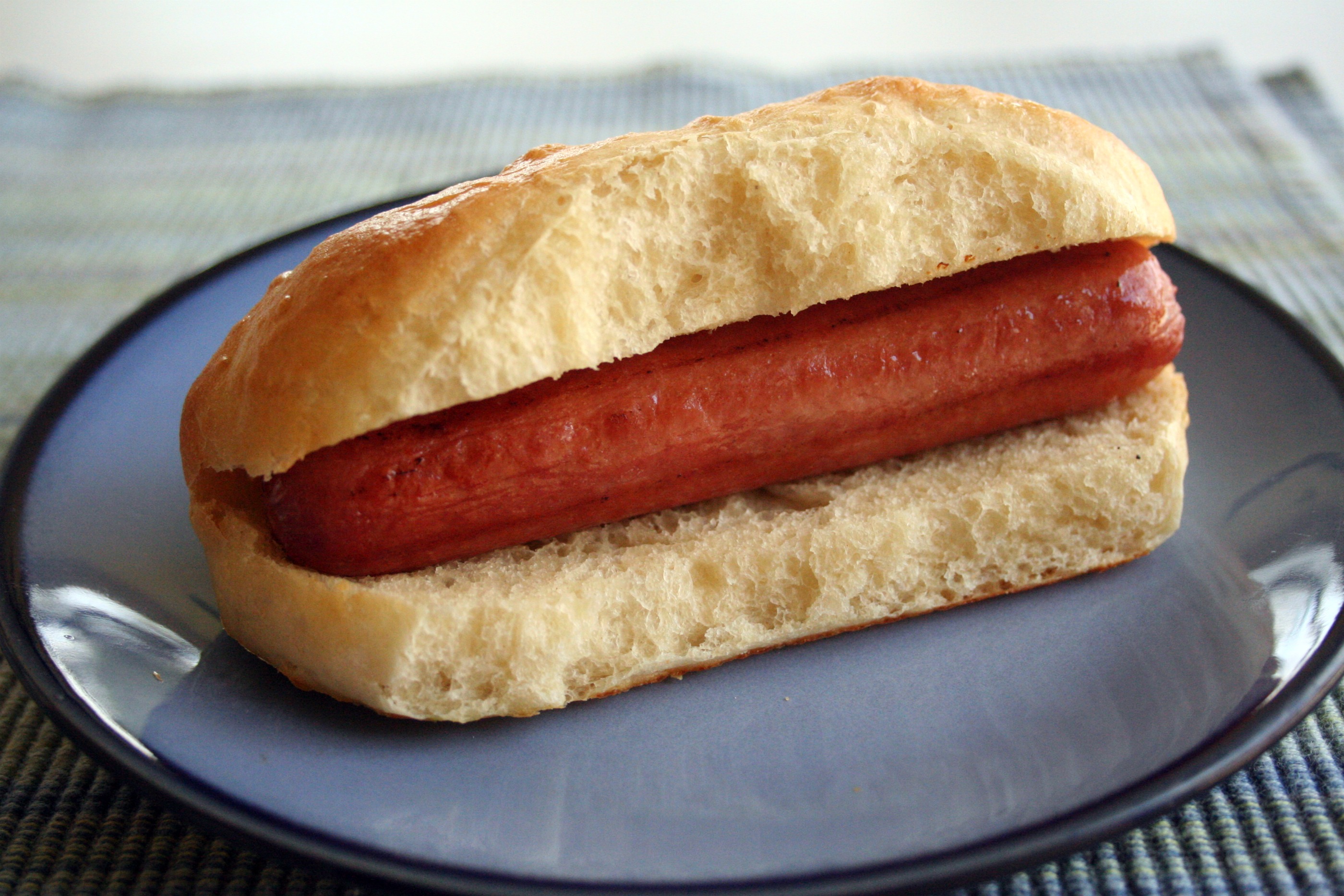
I went and did it – I finally made hot dog buns. Yes, it is easier to just spend the couple of dollars to buy hot dog buns, but why do that when I know how much better homemade tastes? Not to mention, the fact that I know what went into these…have you read ingredient lists on store bought breads? I know these aren’t as smooth and uniform-looking as the packaged kind, but I do know that these taste and smell a whole lot better. And yes, I am a food snob – and I’m totally fine with that! 😉

These make a nice, hearty bun for your hot dog and toppings. M had his with lots of chili and cheese and the bun held up really nice and didn’t get soggy at all. The kids enjoyed these too, and my pickiest eater ate hers faster than her big brother. This recipe made 18 hot dog buns, so I was able to freeze half of these. Next time I use this recipe, I might try to use half the dough for hamburger buns so I can have plenty on homemade buns on hand. Thanks for reading, enjoy!

Hot Dog Buns – adapted from King Arthur Flour

  • 2 tablespoons granulated sugar
  • 2 packets or 2 scant tablespoons active dry yeast
  • 1/2 cup warm water (105°F to 115°F)
  • 2 cups warm milk (105°F to 115°F)
  • 2 tablespoons vegetable oil
  • 2 teaspoons salt
  • 6 to 7 1/2 cups King Arthur Unbleached All-Purpose Flour
Directions –

Mixing: In a large bowl, dissolve the sugar and then the yeast in the warm water. Add the milk, oil, salt and 3 cups of flour to the yeast mixture. Beat vigorously for 2 minutes.Gradually add flour, 1/4 cup at a time, until the dough begins to pull away from the sides of the bowl. Turn the dough out onto a floured work surface.

Kneading: Knead until you have a smooth, elastic dough. Because this dough is so slack, you may find that a bowl scraper or bench knife can be helpful in scooping up the dough and folding it over on itself.

Rising: Put the dough into an oiled bowl. Turn once to coat the entire ball of dough with oil. Cover with a tightly-woven dampened towel and let rise until doubled, about one hour.

Shaping: Turn the dough out onto a lightly oiled work surface. Divide into 18 equal pieces. This is done most easily by dividing the dough first into thirds, then those thirds into halves, then the halves into thirds.

Shape each piece into a ball. For hot-dog buns, roll the balls into cylinders, 4 1/2-inches in length. Flatten the cylinders slightly; dough rises more in the center so this will give a gently rounded top versus a high top.

For soft-sided buns, place them on a well-seasoned baking sheet a half inch apart so they’ll grow together when they rise. For crisper buns, place them three inches apart.

Second Rising: Cover with a towel and let rise until almost doubled, about 45 minutes.

Baking: Fifteen minutes before you want to bake your buns, preheat your oven to 400°F. Just before baking, lightly brush the tops of the buns with the egg wash and sprinkle with whatever seeds strike your fancy.

Bake for 20 minutes or until the internal temperature of the bread reaches 190°F. (A dough thermometer takes the guesswork out of this.)

When the buns are done, remove them from the baking sheet to cool on a wire rack. This will prevent the crust from becoming soggy.